This is currently my code. But when creating the customer user, it ends in an exception.
    public override async Task<SaasTenantDto> CreateAsync(SaasTenantCreateDto input)
    {
        // Set initial edition
        if (input.EditionId == null)
        {
            input.EditionId = (await _editionRepository.FindByDisplayNameAsync(PalmaConsts.EditionNameInitial)).Id;
        }

        // Get email & password for customer user (which is created later)
        var customerEmail = input.AdminEmailAddress;
        var customerPassword = input.AdminPassword;

        // Set default email & password for admin user to input
        input.AdminEmailAddress = PalmaConsts.AdminEmailDefaultValue;
        input.AdminPassword = PalmaConsts.AdminPasswordDefaultValue;

        // Create tenant (with default admin user)
        var tenant = await base.CreateAsync(input);

        // Create customer user
        using (CurrentTenant.Change(tenant.Id, tenant.Name))
        {
            var customerUser = await _userAppServce.CreateAsync(new IdentityUserCreateDto()
            {
                UserName = customerEmail,
                Email = customerEmail,
                Password = customerPassword,
                RoleNames = new[]
                {
                    PalmaConsts.RoleNameCustomer
                }
            });
        }

        // Seed initial data
        await SeedInitialDataAsync(tenant, input);

        return tenant;
    }
AbpAuthorizationException:
2024-09-16 16:26:12.176 +02:00 [WRN] Exception of type 'Volo.Abp.Authorization.AbpAuthorizationException' was thrown.
Volo.Abp.Authorization.AbpAuthorizationException: Exception of type 'Volo.Abp.Authorization.AbpAuthorizationException' was thrown.
   at Microsoft.AspNetCore.Authorization.AbpAuthorizationServiceExtensions.CheckAsync(IAuthorizationService authorizationService, AuthorizationPolicy policy)
   at Volo.Abp.Authorization.MethodInvocationAuthorizationService.CheckAsync(MethodInvocationAuthorizationContext context)
   at Volo.Abp.Authorization.AuthorizationInterceptor.AuthorizeAsync(IAbpMethodInvocation invocation)
   at Volo.Abp.Authorization.AuthorizationInterceptor.InterceptAsync(IAbpMethodInvocation invocation)
   at Volo.Abp.Castle.DynamicProxy.CastleAsyncAbpInterceptorAdapter`1.InterceptAsync[TResult](IInvocation invocation, IInvocationProceedInfo proceedInfo, Func`3 proceed)
   at Castle.DynamicProxy.AsyncInterceptorBase.ProceedAsynchronous[TResult](IInvocation invocation, IInvocationProceedInfo proceedInfo)
   at Volo.Abp.Castle.DynamicProxy.CastleAbpMethodInvocationAdapterWithReturnValue`1.ProceedAsync()
   at Volo.Abp.GlobalFeatures.GlobalFeatureInterceptor.InterceptAsync(IAbpMethodInvocation invocation)
   at Volo.Abp.Castle.DynamicProxy.CastleAsyncAbpInterceptorAdapter`1.InterceptAsync[TResult](IInvocation invocation, IInvocationProceedInfo proceedInfo, Func`3 proceed)
   at Castle.DynamicProxy.AsyncInterceptorBase.ProceedAsynchronous[TResult](IInvocation invocation, IInvocationProceedInfo proceedInfo)
   at Volo.Abp.Castle.DynamicProxy.CastleAbpMethodInvocationAdapterWithReturnValue`1.ProceedAsync()
   at Volo.Abp.Auditing.AuditingInterceptor.ProceedByLoggingAsync(IAbpMethodInvocation invocation, AbpAuditingOptions options, IAuditingHelper auditingHelper, IAuditLogScope auditLogScope)
   at Volo.Abp.Auditing.AuditingInterceptor.ProcessWithNewAuditingScopeAsync(IAbpMethodInvocation invocation, AbpAuditingOptions options, ICurrentUser currentUser, IAuditingManager auditingManager, IAuditingHelper auditingHelper, IUnitOfWorkManager unitOfWorkManager)
   at Volo.Abp.Auditing.AuditingInterceptor.ProcessWithNewAuditingScopeAsync(IAbpMethodInvocation invocation, AbpAuditingOptions options, ICurrentUser currentUser, IAuditingManager auditingManager, IAuditingHelper auditingHelper, IUnitOfWorkManager unitOfWorkManager)
   at Volo.Abp.Auditing.AuditingInterceptor.InterceptAsync(IAbpMethodInvocation invocation)
   at Volo.Abp.Castle.DynamicProxy.CastleAsyncAbpInterceptorAdapter`1.InterceptAsync[TResult](IInvocation invocation, IInvocationProceedInfo proceedInfo, Func`3 proceed)
   at Castle.DynamicProxy.AsyncInterceptorBase.ProceedAsynchronous[TResult](IInvocation invocation, IInvocationProceedInfo proceedInfo)
   at Volo.Abp.Castle.DynamicProxy.CastleAbpMethodInvocationAdapterWithReturnValue`1.ProceedAsync()
   at Volo.Abp.Validation.ValidationInterceptor.InterceptAsync(IAbpMethodInvocation invocation)
   at Volo.Abp.Castle.DynamicProxy.CastleAsyncAbpInterceptorAdapter`1.InterceptAsync[TResult](IInvocation invocation, IInvocationProceedInfo proceedInfo, Func`3 proceed)
   at Castle.DynamicProxy.AsyncInterceptorBase.ProceedAsynchronous[TResult](IInvocation invocation, IInvocationProceedInfo proceedInfo)
   at Volo.Abp.Castle.DynamicProxy.CastleAbpMethodInvocationAdapterWithReturnValue`1.ProceedAsync()
   at Volo.Abp.Uow.UnitOfWorkInterceptor.InterceptAsync(IAbpMethodInvocation invocation)
   at Volo.Abp.Castle.DynamicProxy.CastleAsyncAbpInterceptorAdapter`1.InterceptAsync[TResult](IInvocation invocation, IInvocationProceedInfo proceedInfo, Func`3 proceed)
   at Palma.Saas.PalmaTenantAppService.CreateAsync(SaasTenantCreateDto input)
   at Castle.DynamicProxy.AsyncInterceptorBase.ProceedAsynchronous[TResult](IInvocation invocation, IInvocationProceedInfo proceedInfo)
   at Volo.Abp.Castle.DynamicProxy.CastleAbpMethodInvocationAdapterWithReturnValue`1.ProceedAsync()
   at Volo.Abp.Authorization.AuthorizationInterceptor.InterceptAsync(IAbpMethodInvocation invocation)
   at Volo.Abp.Castle.DynamicProxy.CastleAsyncAbpInterceptorAdapter`1.InterceptAsync[TResult](IInvocation invocation, IInvocationProceedInfo proceedInfo, Func`3 proceed)
   at Castle.DynamicProxy.AsyncInterceptorBase.ProceedAsynchronous[TResult](IInvocation invocation, IInvocationProceedInfo proceedInfo)
   at Volo.Abp.Castle.DynamicProxy.CastleAbpMethodInvocationAdapterWithReturnValue`1.ProceedAsync()
   at Volo.Abp.GlobalFeatures.GlobalFeatureInterceptor.InterceptAsync(IAbpMethodInvocation invocation)
   at Volo.Abp.Castle.DynamicProxy.CastleAsyncAbpInterceptorAdapter`1.InterceptAsync[TResult](IInvocation invocation, IInvocationProceedInfo proceedInfo, Func`3 proceed)
   at Castle.DynamicProxy.AsyncInterceptorBase.ProceedAsynchronous[TResult](IInvocation invocation, IInvocationProceedInfo proceedInfo)
   at Volo.Abp.Castle.DynamicProxy.CastleAbpMethodInvocationAdapterWithReturnValue`1.ProceedAsync()
   at Volo.Abp.Auditing.AuditingInterceptor.ProceedByLoggingAsync(IAbpMethodInvocation invocation, AbpAuditingOptions options, IAuditingHelper auditingHelper, IAuditLogScope auditLogScope)
   at Volo.Abp.Auditing.AuditingInterceptor.InterceptAsync(IAbpMethodInvocation invocation)
   at Volo.Abp.Castle.DynamicProxy.CastleAsyncAbpInterceptorAdapter`1.InterceptAsync[TResult](IInvocation invocation, IInvocationProceedInfo proceedInfo, Func`3 proceed)
   at Castle.DynamicProxy.AsyncInterceptorBase.ProceedAsynchronous[TResult](IInvocation invocation, IInvocationProceedInfo proceedInfo)
   at Volo.Abp.Castle.DynamicProxy.CastleAbpMethodInvocationAdapterWithReturnValue`1.ProceedAsync()
   at Volo.Abp.Validation.ValidationInterceptor.InterceptAsync(IAbpMethodInvocation invocation)
   at Volo.Abp.Castle.DynamicProxy.CastleAsyncAbpInterceptorAdapter`1.InterceptAsync[TResult](IInvocation invocation, IInvocationProceedInfo proceedInfo, Func`3 proceed)
   at Castle.DynamicProxy.AsyncInterceptorBase.ProceedAsynchronous[TResult](IInvocation invocation, IInvocationProceedInfo proceedInfo)
   at Volo.Abp.Castle.DynamicProxy.CastleAbpMethodInvocationAdapterWithReturnValue`1.ProceedAsync()
   at Volo.Abp.Uow.UnitOfWorkInterceptor.InterceptAsync(IAbpMethodInvocation invocation)
   at Volo.Abp.Castle.DynamicProxy.CastleAsyncAbpInterceptorAdapter`1.InterceptAsync[TResult](IInvocation invocation, IInvocationProceedInfo proceedInfo, Func`3 proceed)
   at Volo.Abp.BlazoriseUI.AbpCrudPageBase`10.CreateEntityAsync()
The admin user is automatically created when the new tenant is created. With the customer's e-mail address and password.
However, I would now like two users to be created. On the one hand the user for the customer (with the entered mail address as username) and on the other hand the admin user for us as host.
I have already extended the TenantAppService (of Volo.Saas.Host namespace) & TenantDataSeeder. Where would be the right point to realize this?
Is it best to write the CreateAsync method completely by myself? I would prefer to continue using base.CreateAsync() and add the other one afterwards.
As I said before, you can hide the admin account.
Ok, I just wanted to make sure whether you would recommend this as best practice.
can you share the full error logs?
This is easy to reproduce: Revoke a user's rights to the sessions. But he still has the rights for user management. Then click in actions menu to the item "Sessions". Popup opens, but the data cannot be loaded due to missing authorizations. Because the error is not caught, the popup cannot be closed and the page must be reloaded.
2024-09-16 13:10:39.952 +02:00 [INF] Authorization failed. These requirements were not met:
PermissionRequirement: AbpIdentity.Sessions
2024-09-16 13:10:40.282 +02:00 [INF] Authorization failed. These requirements were not met:
PermissionRequirement: AbpIdentity.Users.Import
2024-09-16 13:10:40.293 +02:00 [INF] Authorization failed. These requirements were not met:
PermissionRequirement: AbpIdentity.Users.Export
2024-09-16 13:10:40.337 +02:00 [INF] Authorization failed. These requirements were not met:
PermissionRequirement: AbpIdentity.Sessions
2024-09-16 13:10:40.947 +02:00 [INF] Authorization failed. These requirements were not met:
PermissionRequirement: AbpIdentity.Users.Import
2024-09-16 13:10:40.951 +02:00 [INF] Authorization failed. These requirements were not met:
PermissionRequirement: AbpIdentity.Users.Export
2024-09-16 13:10:41.085 +02:00 [WRN] Unhandled exception rendering component: Exception of type 'Volo.Abp.Authorization.AbpAuthorizationException' was thrown.
Volo.Abp.Authorization.AbpAuthorizationException: Exception of type 'Volo.Abp.Authorization.AbpAuthorizationException' was thrown.
   at Microsoft.AspNetCore.Authorization.AbpAuthorizationServiceExtensions.CheckAsync(IAuthorizationService authorizationService, AuthorizationPolicy policy)
   at Volo.Abp.Authorization.MethodInvocationAuthorizationService.CheckAsync(MethodInvocationAuthorizationContext context)
   at Volo.Abp.Authorization.AuthorizationInterceptor.AuthorizeAsync(IAbpMethodInvocation invocation)
   at Volo.Abp.Authorization.AuthorizationInterceptor.InterceptAsync(IAbpMethodInvocation invocation)
   at Volo.Abp.Castle.DynamicProxy.CastleAsyncAbpInterceptorAdapter`1.InterceptAsync[TResult](IInvocation invocation, IInvocationProceedInfo proceedInfo, Func`3 proceed)
   at Castle.DynamicProxy.AsyncInterceptorBase.ProceedAsynchronous[TResult](IInvocation invocation, IInvocationProceedInfo proceedInfo)
   at Volo.Abp.Castle.DynamicProxy.CastleAbpMethodInvocationAdapterWithReturnValue`1.ProceedAsync()
   at Volo.Abp.GlobalFeatures.GlobalFeatureInterceptor.InterceptAsync(IAbpMethodInvocation invocation)
   at Volo.Abp.Castle.DynamicProxy.CastleAsyncAbpInterceptorAdapter`1.InterceptAsync[TResult](IInvocation invocation, IInvocationProceedInfo proceedInfo, Func`3 proceed)
   at Castle.DynamicProxy.AsyncInterceptorBase.ProceedAsynchronous[TResult](IInvocation invocation, IInvocationProceedInfo proceedInfo)
   at Volo.Abp.Castle.DynamicProxy.CastleAbpMethodInvocationAdapterWithReturnValue`1.ProceedAsync()
   at Volo.Abp.Auditing.AuditingInterceptor.ProceedByLoggingAsync(IAbpMethodInvocation invocation, AbpAuditingOptions options, IAuditingHelper auditingHelper, IAuditLogScope auditLogScope)
   at Volo.Abp.Auditing.AuditingInterceptor.ProcessWithNewAuditingScopeAsync(IAbpMethodInvocation invocation, AbpAuditingOptions options, ICurrentUser currentUser, IAuditingManager auditingManager, IAuditingHelper auditingHelper, IUnitOfWorkManager unitOfWorkManager)
   at Volo.Abp.Auditing.AuditingInterceptor.ProcessWithNewAuditingScopeAsync(IAbpMethodInvocation invocation, AbpAuditingOptions options, ICurrentUser currentUser, IAuditingManager auditingManager, IAuditingHelper auditingHelper, IUnitOfWorkManager unitOfWorkManager)
   at Volo.Abp.Auditing.AuditingInterceptor.InterceptAsync(IAbpMethodInvocation invocation)
   at Volo.Abp.Castle.DynamicProxy.CastleAsyncAbpInterceptorAdapter`1.InterceptAsync[TResult](IInvocation invocation, IInvocationProceedInfo proceedInfo, Func`3 proceed)
   at Castle.DynamicProxy.AsyncInterceptorBase.ProceedAsynchronous[TResult](IInvocation invocation, IInvocationProceedInfo proceedInfo)
   at Volo.Abp.Castle.DynamicProxy.CastleAbpMethodInvocationAdapterWithReturnValue`1.ProceedAsync()
   at Volo.Abp.Validation.ValidationInterceptor.InterceptAsync(IAbpMethodInvocation invocation)
   at Volo.Abp.Castle.DynamicProxy.CastleAsyncAbpInterceptorAdapter`1.InterceptAsync[TResult](IInvocation invocation, IInvocationProceedInfo proceedInfo, Func`3 proceed)
   at Castle.DynamicProxy.AsyncInterceptorBase.ProceedAsynchronous[TResult](IInvocation invocation, IInvocationProceedInfo proceedInfo)
   at Volo.Abp.Castle.DynamicProxy.CastleAbpMethodInvocationAdapterWithReturnValue`1.ProceedAsync()
   at Volo.Abp.Uow.UnitOfWorkInterceptor.InterceptAsync(IAbpMethodInvocation invocation)
   at Volo.Abp.Castle.DynamicProxy.CastleAsyncAbpInterceptorAdapter`1.InterceptAsync[TResult](IInvocation invocation, IInvocationProceedInfo proceedInfo, Func`3 proceed)
   at Volo.Abp.Identity.Pro.Blazor.Pages.Identity.UserManagement.GetSessionsAsync()
   at Volo.Abp.Identity.Pro.Blazor.Pages.Identity.UserManagement.OnSessionsDataGridReadAsync(DataGridReadDataEventArgs`1 e)
   at Microsoft.AspNetCore.Components.ComponentBase.CallStateHasChangedOnAsyncCompletion(Task task)
   at Blazorise.DataGrid.DataGrid`1.HandleReadData(CancellationToken cancellationToken)
   at Blazorise.DataGrid.DataGrid`1.HandleReadData(CancellationToken cancellationToken)
   at Blazorise.DataGrid.DataGrid`1.ReloadInternal(CancellationToken cancellationToken)
   at Blazorise.DataGrid.DataGrid`1.Reload(CancellationToken cancellationToken)
   at Blazorise.DataGrid.DataGrid`1.OnAfterRenderAsync(Boolean firstRender)
   at Microsoft.AspNetCore.Components.RenderTree.Renderer.GetErrorHandledTask(Task taskToHandle, ComponentState owningComponentState)
2024-09-16 13:10:41.106 +02:00 [ERR] Unhandled exception in circuit 'N2gQs-_B3hRk7fLkFUyHWOQEsrMSLn2jdUNcr6S9ck8'.
Volo.Abp.Authorization.AbpAuthorizationException: Exception of type 'Volo.Abp.Authorization.AbpAuthorizationException' was thrown.
   at Microsoft.AspNetCore.Authorization.AbpAuthorizationServiceExtensions.CheckAsync(IAuthorizationService authorizationService, AuthorizationPolicy policy)
   at Volo.Abp.Authorization.MethodInvocationAuthorizationService.CheckAsync(MethodInvocationAuthorizationContext context)
   at Volo.Abp.Authorization.AuthorizationInterceptor.AuthorizeAsync(IAbpMethodInvocation invocation)
   at Volo.Abp.Authorization.AuthorizationInterceptor.InterceptAsync(IAbpMethodInvocation invocation)
   at Volo.Abp.Castle.DynamicProxy.CastleAsyncAbpInterceptorAdapter`1.InterceptAsync[TResult](IInvocation invocation, IInvocationProceedInfo proceedInfo, Func`3 proceed)
   at Castle.DynamicProxy.AsyncInterceptorBase.ProceedAsynchronous[TResult](IInvocation invocation, IInvocationProceedInfo proceedInfo)
   at Volo.Abp.Castle.DynamicProxy.CastleAbpMethodInvocationAdapterWithReturnValue`1.ProceedAsync()
   at Volo.Abp.GlobalFeatures.GlobalFeatureInterceptor.InterceptAsync(IAbpMethodInvocation invocation)
   at Volo.Abp.Castle.DynamicProxy.CastleAsyncAbpInterceptorAdapter`1.InterceptAsync[TResult](IInvocation invocation, IInvocationProceedInfo proceedInfo, Func`3 proceed)
   at Castle.DynamicProxy.AsyncInterceptorBase.ProceedAsynchronous[TResult](IInvocation invocation, IInvocationProceedInfo proceedInfo)
   at Volo.Abp.Castle.DynamicProxy.CastleAbpMethodInvocationAdapterWithReturnValue`1.ProceedAsync()
   at Volo.Abp.Auditing.AuditingInterceptor.ProceedByLoggingAsync(IAbpMethodInvocation invocation, AbpAuditingOptions options, IAuditingHelper auditingHelper, IAuditLogScope auditLogScope)
   at Volo.Abp.Auditing.AuditingInterceptor.ProcessWithNewAuditingScopeAsync(IAbpMethodInvocation invocation, AbpAuditingOptions options, ICurrentUser currentUser, IAuditingManager auditingManager, IAuditingHelper auditingHelper, IUnitOfWorkManager unitOfWorkManager)
   at Volo.Abp.Auditing.AuditingInterceptor.ProcessWithNewAuditingScopeAsync(IAbpMethodInvocation invocation, AbpAuditingOptions options, ICurrentUser currentUser, IAuditingManager auditingManager, IAuditingHelper auditingHelper, IUnitOfWorkManager unitOfWorkManager)
   at Volo.Abp.Auditing.AuditingInterceptor.InterceptAsync(IAbpMethodInvocation invocation)
   at Volo.Abp.Castle.DynamicProxy.CastleAsyncAbpInterceptorAdapter`1.InterceptAsync[TResult](IInvocation invocation, IInvocationProceedInfo proceedInfo, Func`3 proceed)
   at Castle.DynamicProxy.AsyncInterceptorBase.ProceedAsynchronous[TResult](IInvocation invocation, IInvocationProceedInfo proceedInfo)
   at Volo.Abp.Castle.DynamicProxy.CastleAbpMethodInvocationAdapterWithReturnValue`1.ProceedAsync()
   at Volo.Abp.Validation.ValidationInterceptor.InterceptAsync(IAbpMethodInvocation invocation)
   at Volo.Abp.Castle.DynamicProxy.CastleAsyncAbpInterceptorAdapter`1.InterceptAsync[TResult](IInvocation invocation, IInvocationProceedInfo proceedInfo, Func`3 proceed)
   at Castle.DynamicProxy.AsyncInterceptorBase.ProceedAsynchronous[TResult](IInvocation invocation, IInvocationProceedInfo proceedInfo)
   at Volo.Abp.Castle.DynamicProxy.CastleAbpMethodInvocationAdapterWithReturnValue`1.ProceedAsync()
   at Volo.Abp.Uow.UnitOfWorkInterceptor.InterceptAsync(IAbpMethodInvocation invocation)
   at Volo.Abp.Castle.DynamicProxy.CastleAsyncAbpInterceptorAdapter`1.InterceptAsync[TResult](IInvocation invocation, IInvocationProceedInfo proceedInfo, Func`3 proceed)
   at Volo.Abp.Identity.Pro.Blazor.Pages.Identity.UserManagement.GetSessionsAsync()
   at Volo.Abp.Identity.Pro.Blazor.Pages.Identity.UserManagement.OnSessionsDataGridReadAsync(DataGridReadDataEventArgs`1 e)
   at Microsoft.AspNetCore.Components.ComponentBase.CallStateHasChangedOnAsyncCompletion(Task task)
   at Blazorise.DataGrid.DataGrid`1.HandleReadData(CancellationToken cancellationToken)
   at Blazorise.DataGrid.DataGrid`1.HandleReadData(CancellationToken cancellationToken)
   at Blazorise.DataGrid.DataGrid`1.ReloadInternal(CancellationToken cancellationToken)
   at Blazorise.DataGrid.DataGrid`1.Reload(CancellationToken cancellationToken)
   at Blazorise.DataGrid.DataGrid`1.OnAfterRenderAsync(Boolean firstRender)
   at Microsoft.AspNetCore.Components.RenderTree.Renderer.GetErrorHandledTask(Task taskToHandle, ComponentState owningComponentState)
actually, this is impossible. Because tenants and host data are independent
Ok, that's what I assumed.
Did you see that I found a bug? Please enter this as a bug in your backlog.
User has permission to edit a user. Now the item “Sessions” appears in the action menu. If I want to open this, the error message Volo.Abp.Authorization.AbpAuthorizationException appears (because the user has not set the “Sessions” permission). This should then also not be available in the menu.
I would also like to know what you would suggest as best practice for such a scenario as I have described?
Hi liangshiwei, thank you for your answers.
You can use the tenant simulation feature
What do you mean by “tenant simulation”? I assume you mean the “Login with this tenant” button. But this only works if an admin user is assigned to the tenant. However, I mean the option of being able to log in to the tenants with the host admin and having admin rights.
Ok, thank you for the answer.
Scenario: In our web application, our customers get one tenant each. The customer then has the option to add further users to the tenant (other employees of the company). To be able to create (and delete) other users, they need permission for user management (Create, Edit, Delete, View details). We do not want to give them any other rights (no role management, no sessions, ...).
So that we still have an admin user (for us) who has all the admin rights, we would like to preserve the general admin user. However, the customer does not receive this login data. We do not want the customer to be able to change / delete this user.
Is this procedure unusual? What are best practices for this case, which certainly occurs often?
Menu item:
I would also like the customer not to see the Identity management menu item, but directly an item named User management. How should I do this?
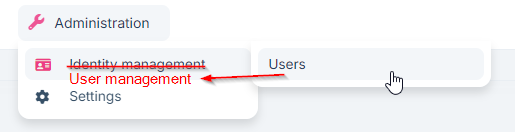
I have noticed something else:
User has permission to edit a user. Now the item “Sessions” appears in the action menu. If I want to open this, the error message Volo.Abp.Authorization.AbpAuthorizationException appears (because the user has not set the “Sessions” permission). This should then also not be available in the menu.
Thanks, Adrian
I thought I would have to implement this myself. I just hoped you could give me a few tips on how to do it. Or perhaps how you implemented it at Abp.
Sorry for the three new questions to the payment / subscriptions:
Where do I configure whether a subscription is automatically renewed or whether the user has to renew it manually? You at ABP have implemented the “Automatic Renewal” option in “Organization Management”. How does it work if this is changed? Is there a request to the payment provider and then this is stored there with the subscription?
How can you implement that a customer can cancel their subscription again?
We still need the option for the customer to view the invoice. Stripe has a link for this, but how can I access this link? It would be best if this could be displayed directly on the Payment Success page.
Please send an email to liming.ma@volosoft.com I will share the source code.
Thanks a lot for your mail.
Enabling WebHooks Configuring Web Hooks is highly important for subscriptions otherwise your application won't be able to get subscription changes, such as canceled or updated states. Each gateway has its own configuration:
https://abp.io/docs/commercial/5.1/modules/payment#enabling-webhooks
Stripe will send a request to your website(
yourdomain.com/payment/stripe/webhook)
Yes, exactly, I am aware of that. And it also works for renewing a subscription. But an early cancellation or change of the subscription duration is not implemented (I would have thought that this should come via the “customer.subscription.updated” event).









