I am working with the ABP Framework, and I came across a pattern in the code where a controller class is implementing an application service interface, as shown below:
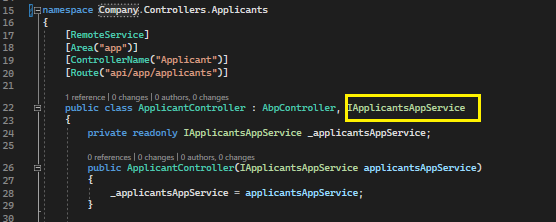
Could you kindly clarify the reasoning behind this pattern? Specifically, why would a controller implement an application service interface, as it seems to merge the concerns of both the controller and the service layer into one class?
I understand that typically the application service encapsulates the business logic, while the controller handles the HTTP requests. Is this an intended pattern in certain scenarios within ABP, and what would be the advantages or trade-offs of using it compared to the more common separation of concerns?
I would like to implement a feature to disable concurrent user logins in our application to enhance security.
Requirements:
Most of the articles I found here is for Identity Server 4, I have migrated to OpenIdDict, is there a built-in feature for this?
Please provide guidance on how to configure or extend the ABP framework to achieve this behavior.
Thank you.
ok, I will try and update the result here.
This seems like a drawback for us. Is there any plan to make this configurable through the UI?
Hi @maliming, does it mean there is no UI to configure it and we need to manage the claims in code?
we are using "client_credentials" & "authorization_code" grant types.
Hi @maliming, I have checked the OpenIddictDataSeedContributor, but there are some features that available in IdentityServer but missing in OpenIdDict.
With IdentityServer, we can create the Api Resources and Identity Resource using the following screens:
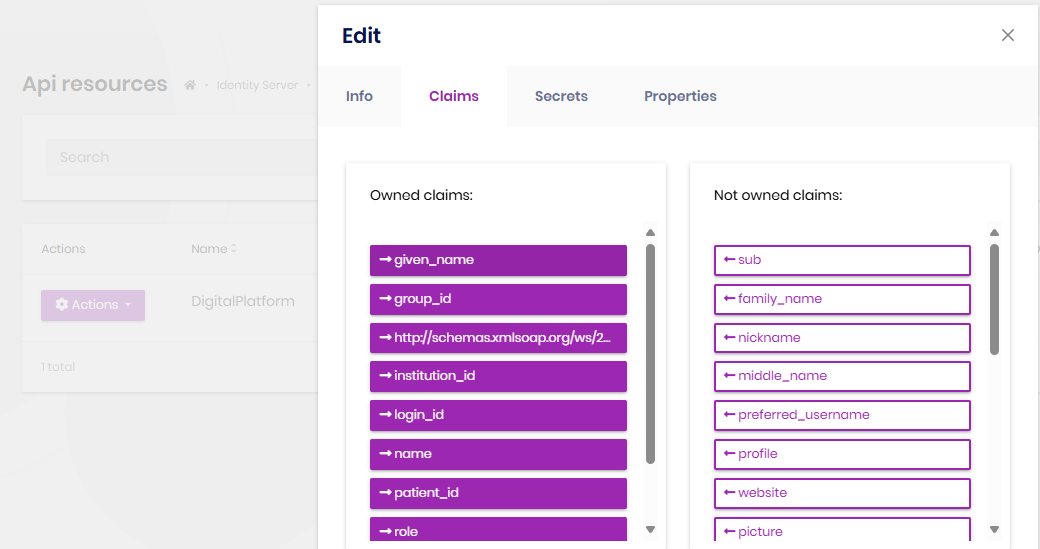
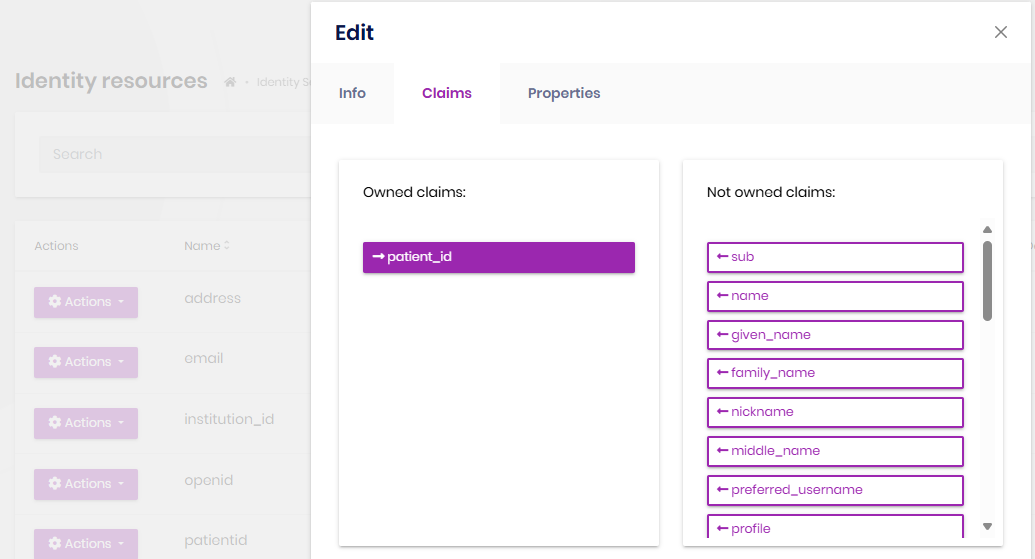
<br>
And then we can configure the Api Resource & Identity Resources for a Client:
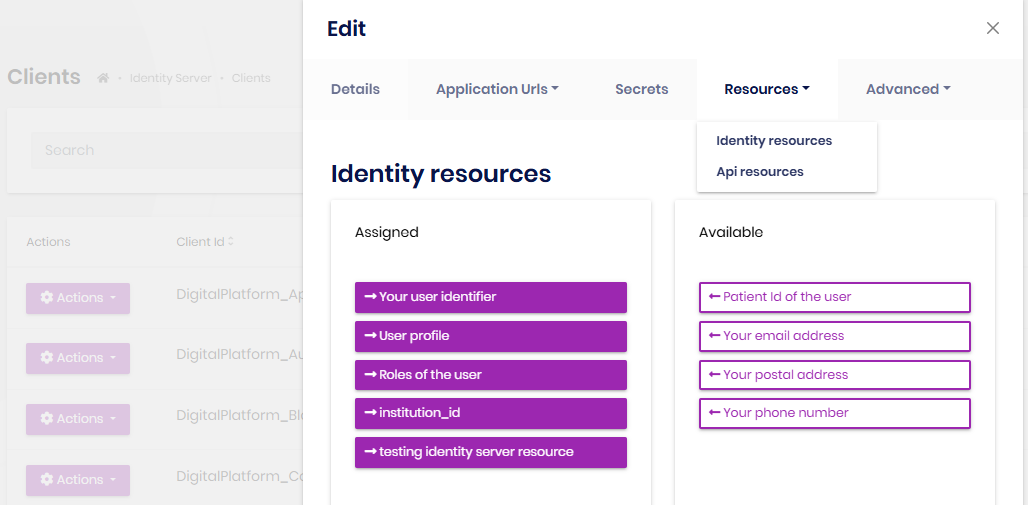
How can we achieve these features with OpenIdDict?
We are migrating our auth server from IdentityServer to OpenIdDict. While we have reviewed the migration guide, we have not found any documentation on how to migrate the data from IdentityServer tables to OpenIdDict tables. Could you provide guidance on this process?
Hi @liangshiwei, noted, thank you!
Hi @liangshiwei, Thanks for your prompt reply.
I saw this statement in the migration guide: https://docs.abp.io/en/abp/latest/Migration-Guides/OpenIddict-Step-by-Step:
"The Identity Server team has decided to move to Duende IDS and ABP will not be migrated to the commercial Duende IDS. "
If ABP does not migrate to the commercial Duende IDS, how can you support it if we encounter any issues? Additionally, will the next release of ABP be compatible with the commercial Duende IDS?
Hello, I understand that Identity Server has commercialized their product under the name Duende Identity Server, it made the ABP team to transition to OpenIDDict.
If our company purchase a license for Duende Identity Server, would it still be supported by the ABP team?
Hi @maliming, yes, I know that IDS support has been ended in 2022, just want to know if ABP continues to ship IDS-related packages in ABP 8?