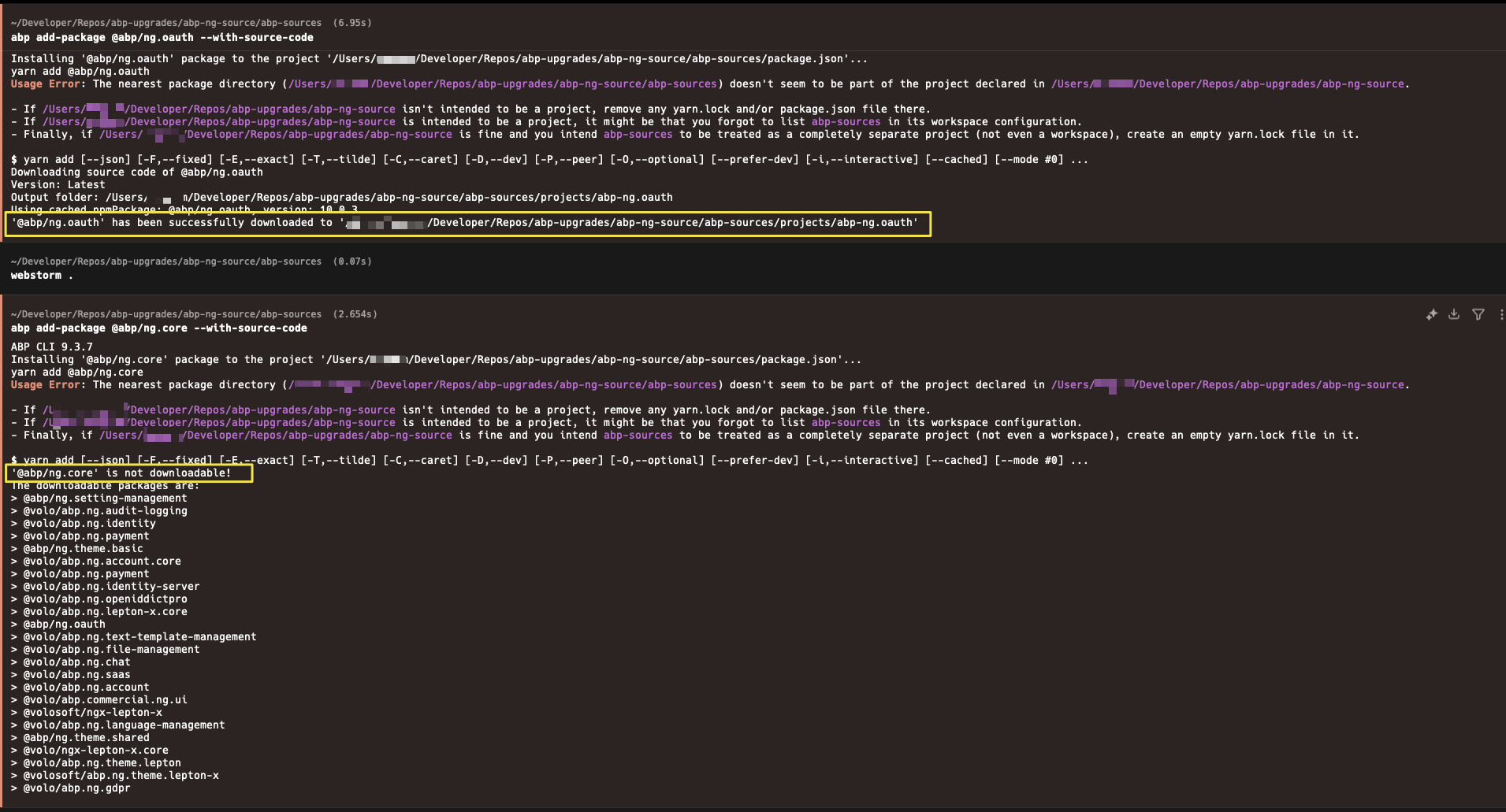
Hi, we followed the instrustions to get the angular source. These are the results, I can get the oath source without any issue but core throws an error
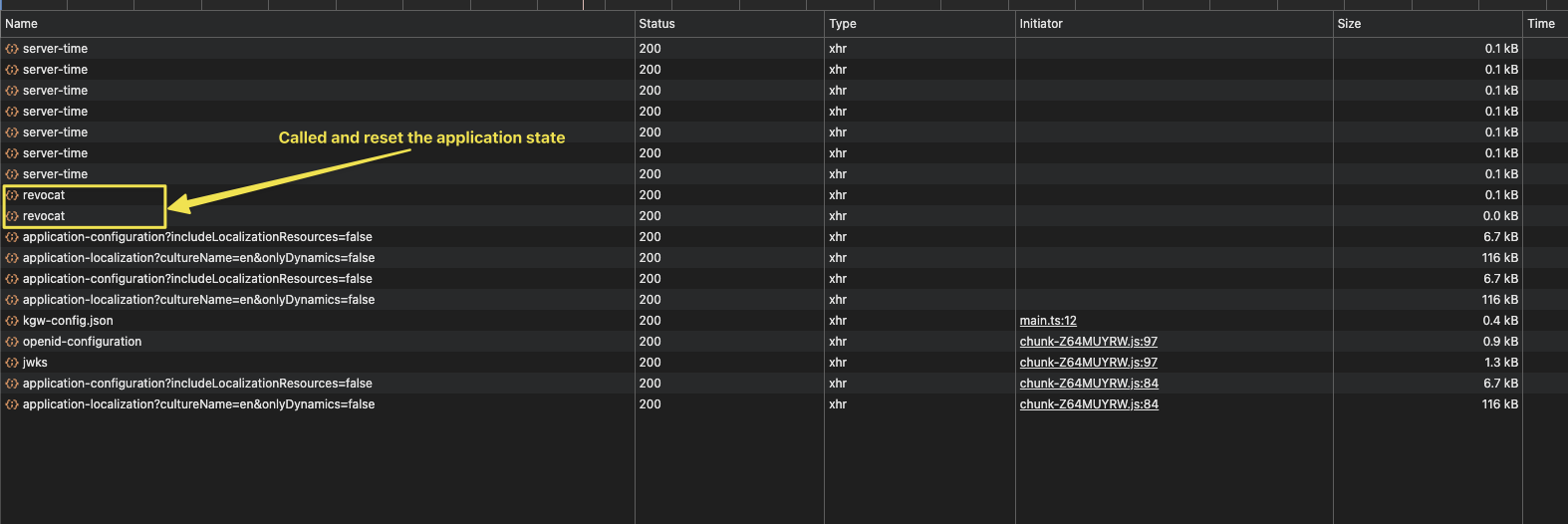
This does not solve my problem, from the chuck files there are multiple services calling the revoke endpoint (volo-abp.ng.account-, volo-abp.ng.identity-, etc

Hi ABP Team,
We’re currently experiencing an intermittent issue in our Angular front end where users are being signed out when the access token expires. In some cases, the refresh endpoint is successfully called, yet the application still ends up revoking the session and redirecting the user to the login page.
Once the revoke endpoint is triggered, the entire application performs a full refresh, causing users to lose their current application state. This is particularly problematic for users who are in the middle of completing forms or workflows.
The issue is difficult to reproduce consistently, which makes it challenging to debug.
I was able to review the oauth-module source and noticed that its interceptor does not explicitly attempt to refresh or log out when the token is expired. This suggests that something within the @abp/ng.core module (possibly an interceptor or authentication-related service) may be triggering the revoke endpoint and forcing the redirect.
Unfortunately, I’m unable to access the relevant core module source when attempting to download the package sources.
Would it be possible to obtain access to the @abp/ng.core source code (or at least the portions related to authentication and interceptors) so we can properly inspect and diagnose what is triggering the revoke call?
Your assistance would be greatly appreciated.
Kind regards, Mogau
That fixes it, overriding the implicit dependency pulled in by abp. Thanks a lot, works on net9.0 target as well
Hi sure, please use the following link DELETED. Also run the docker compose file in the migrator for a test database
I’m experiencing a critical issue when running EF Core migrations on macOS (Apple Silicon) using ABP v9 with the Devart Oracle provider.
I recently upgraded from .NET 8 to .NET 9 and was able to run migrations without issue prior to the upgrade. Migrations targeting SQL Server are not affected — the issue appears specific to Oracle (Devart) on macOS.
I’d appreciate guidance on whether this is a known limitation or if there is a recommended configuration.
Exception message and full stack trace:
Fatal error. System.AccessViolationException: Attempted to read or write protected memory. This is often an indication that other memory is corrupt. at System.Runtime.InteropServices.Marshal.WriteInt32(IntPtr, Int32, Int32) at CeFcm4kuMpCvdFmV8C.uTJxbl9WRAXV6jfcAd.JipZQKrCeCqytYrGNyd(IntPtr, Int32) at CeFcm4kuMpCvdFmV8C.uTJxbl9WRAXV6jfcAd.K9otpUdIVy() at <Module>..cctor() at update.EntityFrameworkCore.updateDbContextFactory.CreateDbContext(System.String[]) at System.RuntimeMethodHandle.InvokeMethod(System.Object, Void**, System.Signature, Boolean) at System.Reflection.MethodBaseInvoker.InvokeDirectByRefWithFewArgs(System.Object, System.Span1<System.Object>, System.Reflection.BindingFlags) at System.Reflection.MethodBaseInvoker.InvokeWithOneArg(System.Object, System.Reflection.BindingFlags, System.Reflection.Binder, System.Object[], System.Globalization.CultureInfo) at System.Reflection.RuntimeMethodInfo.Invoke(System.Object, System.Reflection.BindingFlags, System.Reflection.Binder, System.Object[], System.Globalization.CultureInfo) at Microsoft.EntityFrameworkCore.Design.Internal.DbContextOperations.CreateContextFromFactory(System.Type, System.Type) at Microsoft.EntityFrameworkCore.Design.Internal.DbContextOperations+<>c__DisplayClass29_0.<FindContextFactory>b__0() at Microsoft.EntityFrameworkCore.Design.Internal.DbContextOperations.CreateContext(System.String, System.Collections.Generic.KeyValuePair2<System.Type,System.Func1<Microsoft.EntityFrameworkCore.DbContext>>) at Microsoft.EntityFrameworkCore.Design.Internal.DbContextOperations.CreateContext(System.String) at Microsoft.EntityFrameworkCore.Design.Internal.MigrationsOperations.AddMigration(System.String, System.String, System.String, System.String, Boolean) at Microsoft.EntityFrameworkCore.Design.OperationExecutor.AddMigrationImpl(System.String, System.String, System.String, System.String, Boolean) at Microsoft.EntityFrameworkCore.Design.OperationExecutor+AddMigration+<>c__DisplayClass0_0.<.ctor>b__0() at Microsoft.EntityFrameworkCore.Design.OperationExecutor+OperationBase+<>c__DisplayClass3_01[[System.__Canon, System.Private.CoreLib, Version=9.0.0.0, Culture=neutral, PublicKeyToken=7cec85d7bea7798e]].<Execute>b__0() at Microsoft.EntityFrameworkCore.Design.OperationExecutor+OperationBase.Execute(System.Action) at Microsoft.EntityFrameworkCore.Design.OperationExecutor+OperationBase.Execute[[System.__Canon, System.Private.CoreLib, Version=9.0.0.0, Culture=neutral, PublicKeyToken=7cec85d7bea7798e]](System.Func1<System.__Canon>) at Microsoft.EntityFrameworkCore.Design.OperationExecutor+AddMigration..ctor(Microsoft.EntityFrameworkCore.Design.OperationExecutor, Microsoft.EntityFrameworkCore.Design.IOperationResultHandler, System.Collections.IDictionary) at System.RuntimeMethodHandle.InvokeMethod(System.Object, Void**, System.Signature, Boolean) at System.Reflection.MethodBaseInvoker.InvokeDirectByRefWithFewArgs(System.Object, System.Span1<System.Object>, System.Reflection.BindingFlags) at System.Reflection.MethodBaseInvoker.InvokeWithFewArgs(System.Object, System.Reflection.BindingFlags, System.Reflection.Binder, System.Object[], System.Globalization.CultureInfo) at System.Reflection.RuntimeConstructorInfo.Invoke(System.Reflection.BindingFlags, System.Reflection.Binder, System.Object[], System.Globalization.CultureInfo) at System.RuntimeType.CreateInstanceImpl(System.Reflection.BindingFlags, System.Reflection.Binder, System.Object[], System.Globalization.CultureInfo) at Microsoft.EntityFrameworkCore.Tools.ReflectionOperationExecutor.Execute(System.String, System.Object, System.Collections.IDictionary) at System.Dynamic.UpdateDelegates.UpdateAndExecuteVoid4[[System.__Canon, System.Private.CoreLib, Version=9.0.0.0, Culture=neutral, PublicKeyToken=7cec85d7bea7798e],[System.__Canon, System.Private.CoreLib, Version=9.0.0.0, Culture=neutral, PublicKeyToken=7cec85d7bea7798e],[System.__Canon, System.Private.CoreLib, Version=9.0.0.0, Culture=neutral, PublicKeyToken=7cec85d7bea7798e],[System.__Canon, System.Private.CoreLib, Version=9.0.0.0, Culture=neutral, PublicKeyToken=7cec85d7bea7798e]](System.Runtime.CompilerServices.CallSite, System.__Canon, System.__Canon, System.__Canon, System.__Canon) at Microsoft.EntityFrameworkCore.Tools.OperationExecutorBase.InvokeOperationImpl(System.String, System.Collections.IDictionary) at Microsoft.EntityFrameworkCore.Tools.OperationExecutorBase.InvokeOperation[[System.__Canon, System.Private.CoreLib, Version=9.0.0.0, Culture=neutral, PublicKeyToken=7cec85d7bea7798e]](System.String, System.Collections.IDictionary) at Microsoft.EntityFrameworkCore.Tools.OperationExecutorBase.AddMigration(System.String, System.String, System.String, System.String) at Microsoft.EntityFrameworkCore.Tools.Commands.MigrationsAddCommand.Execute(System.String[]) at Microsoft.EntityFrameworkCore.Tools.Commands.CommandBase+<>c__DisplayClass0_0.<Configure>b__0(System.String[]) at Microsoft.DotNet.Cli.CommandLine.CommandLineApplication.Execute(System.String[]) at Microsoft.EntityFrameworkCore.Tools.Program.Main(System.String[])
Steps to reproduce the issue:
Create a new ABP solution:
abp new update -u angular -dbms Oracle-Devart --version 9.3.7
Run initial migrations in the aspnet-core project
dotnet ef migrations add Initial \ --project src/update.EntityFrameworkCore/update.EntityFrameworkCore.csproj \ --startup-project src/update.DbMigrator/update.DbMigrator.csproj \ --context update.EntityFrameworkCore.updateDbContext \ --configuration Debug \ --verbose \ --output-dir Migrations
Thanks liangshiwei, I'll try the controller override method.
We're already using a policy for the other services and this allows us to check for the primary scope but also grant access if a child scope is permitted.
Hi guys, my team and I are planning to expose a few apis to external clients, and in doing so we want to limit certain apis using an OpenIddict scope. We've managed to successfully do this with our custom apis but having an issue the core abp apis.
These are some of them, we'd like to limit these apis using a scope. So only the application authorized can access these endpoints even if the authenticated user has the required roles /api/audit-logging/* /api/setting-management/* /api/file-management/*
Please assist
Regards, Mogau
Hi Masum,
Unfortunately I cannot change the abp angular code where the issue is, I have added an interceptor to remap those fields to mitigate the issue. Which version did you run a working version on?









