hi
There is a GetTenantDomain = (context, _) => Task.FromResult(context.Request.Scheme + "://" + context.Request.Host); in AbpAccountOptions to get tenant domain.
The source code from https://abp.io/support/questions/4615/Impersonate-tenant-issue-with-custom-tenant-resolver-by-sub-domain
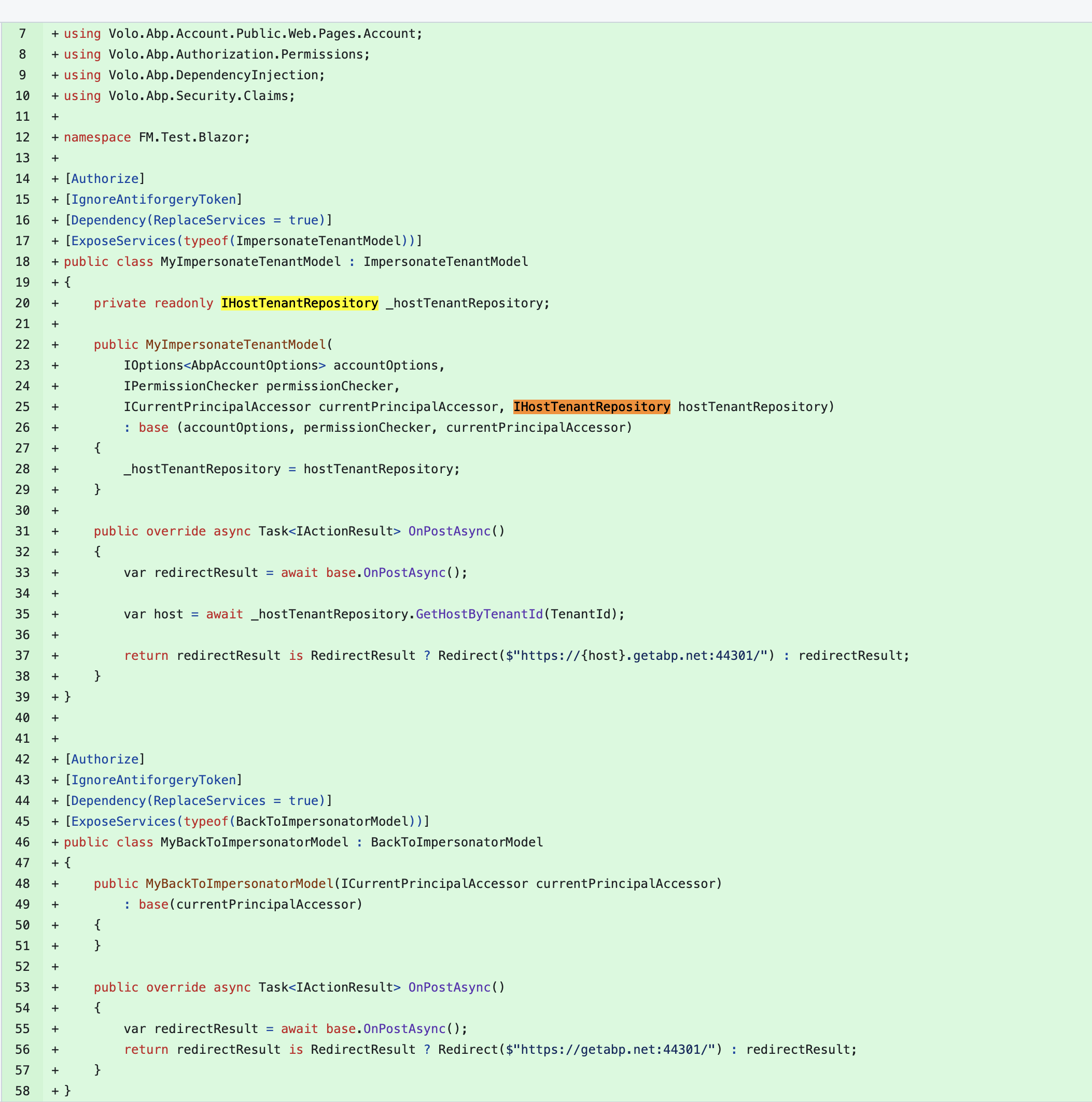
I will try to use GetTenantDomain during Impersonate
Thanks.
hi
The device code flow is used to authenticate/generate tokens for a device. e.g., ABP CLI supports this flow.
You can try run abp login --device.
The source code : https://github.com/abpframework/abp/pull/10857
hi
Can you try to run the dotnet xxxx.HttpApi.Host.dllcommand in your website folder and check the output?
hi
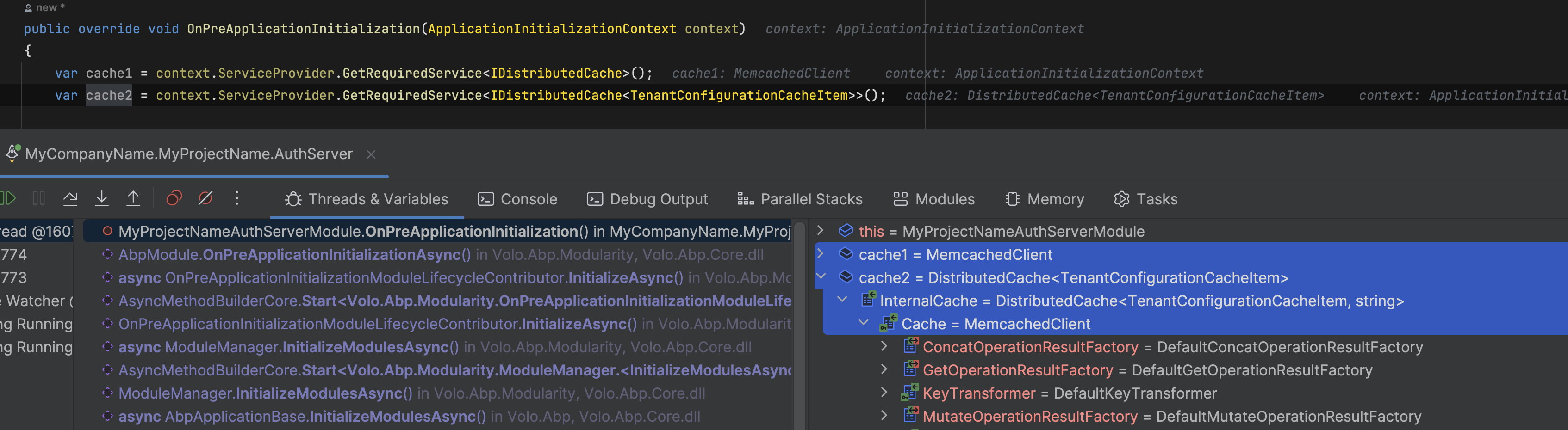
Sorry for that. Please add the code below.
context.Services.RemoveAll(x => x.ServiceType == typeof(IDistributedCache));
context.Services.AddEnyimMemcached(asDistributedCache: true);
hi
I tried to reproduce this problem in https://demo.abp.io/index.html, but I can't reproduce it.
Can you test this in a new template project. if you can reproduce please share the test project with me. I will check it. Thanks.
hi balazs.koczab
You can use openiddict as authserver. The default template is already built.
Then add AddOpenIdConnect(oidc) in your backend and public MVC website.
Once you sign at the public MVC website. The backend website will sign automatically.
If you want to share the oidc cookies between backend and public you can see:
https://abp.io/community/articles/how-to-share-the-cookies-between-subdomains-jfrzggc2
hi
Please check and share the stderr logs .
https://abp.io/docs/latest/solution-templates/layered-web-application/deployment/deployment-iis?UI=NG&DB=EF&Tiered=Yes#how-to-get-stdout-log
hi
https://abp.io/docs/latest/framework/fundamentals/authorization#claims-principal-factory
hi
I have shared the source code.









