

ABP Studio is a cross-platform desktop application for ABP developers.
It is well integrated to the ABP Framework and aims to provide a comfortable development environment for you by automating things, providing insights about your solution, making develop, run and deploy your solutions much easier.
ABP Studio is the easiest way to get started with the ABP Platform. Download it using the following button and create your first ABP solution today. For more details, check out the ABP Studio documentation.
Microsoft Store is the recommended Windows experience. Use Manual Download if you prefer a standalone installer or need another platform.
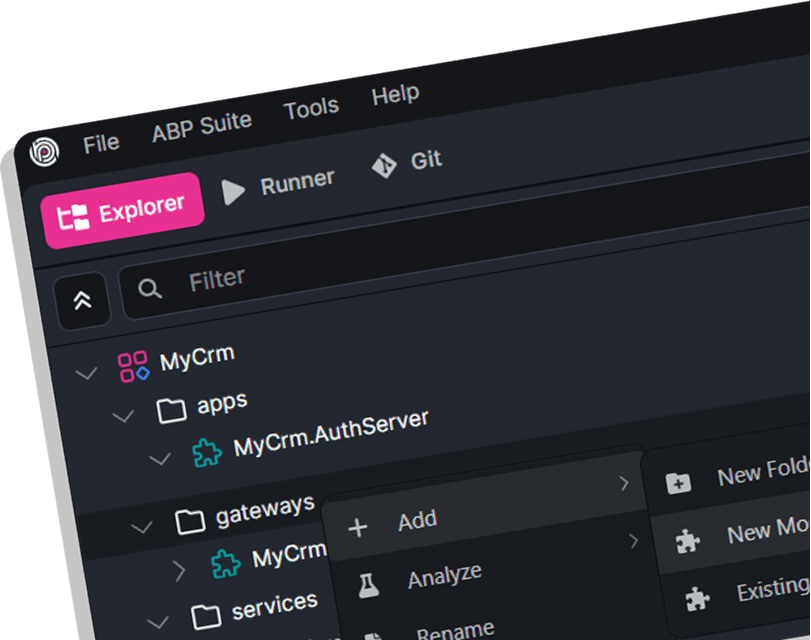
You can create from simple applications to modular monolith or microservice solutions easily with a lot of options. You get a full production-ready base software solution for your business.
Build monolith-modular and microservice solution structures easier by creating modules or services and establishing relations between them. You can also install or uninstall pre-built application modules.
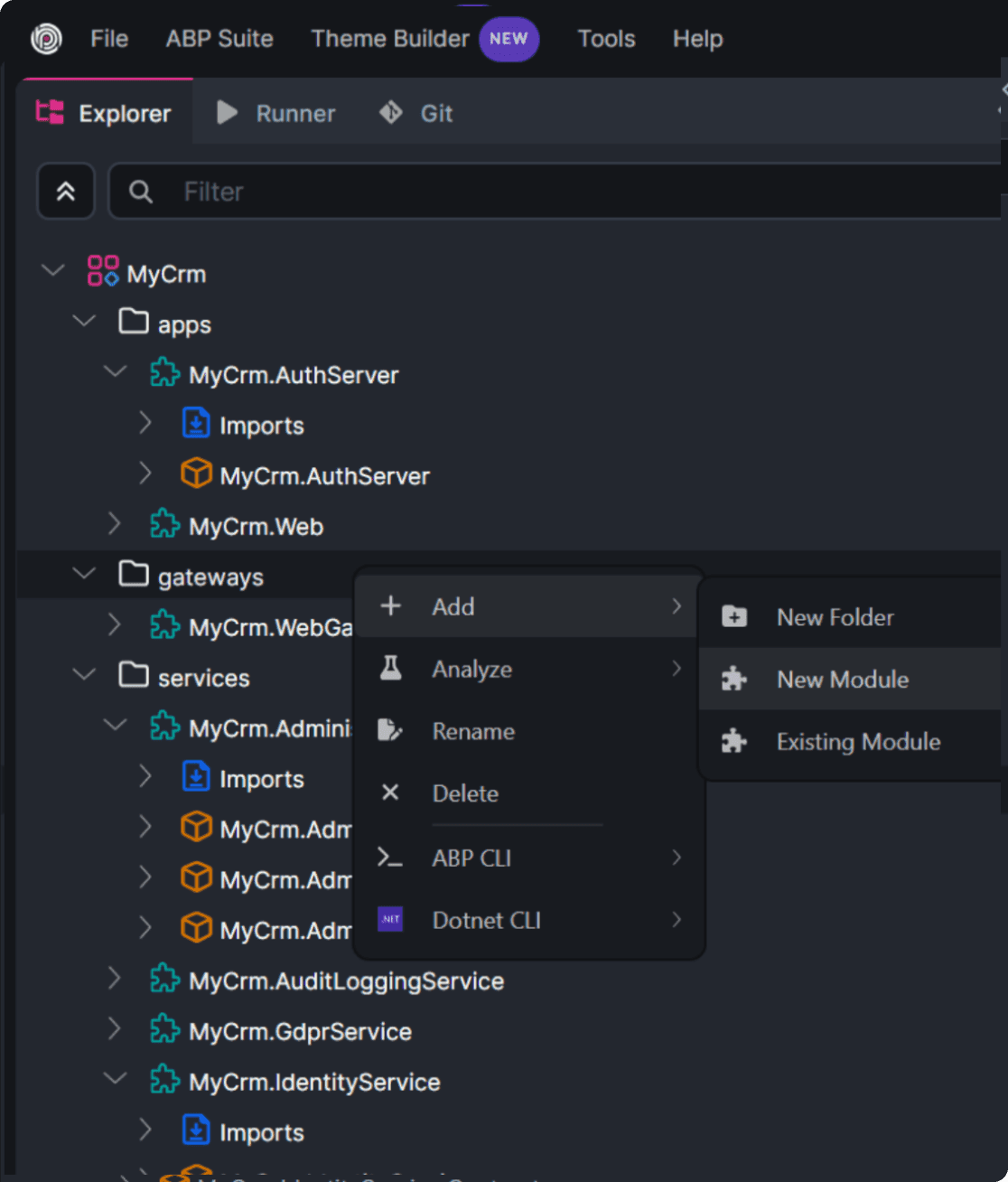
ABP Studio shows a high-level view of components in your solution and the modules your solution depends on. You can explore entities, services, HTTP APIs and much more without needing to open your codebase.
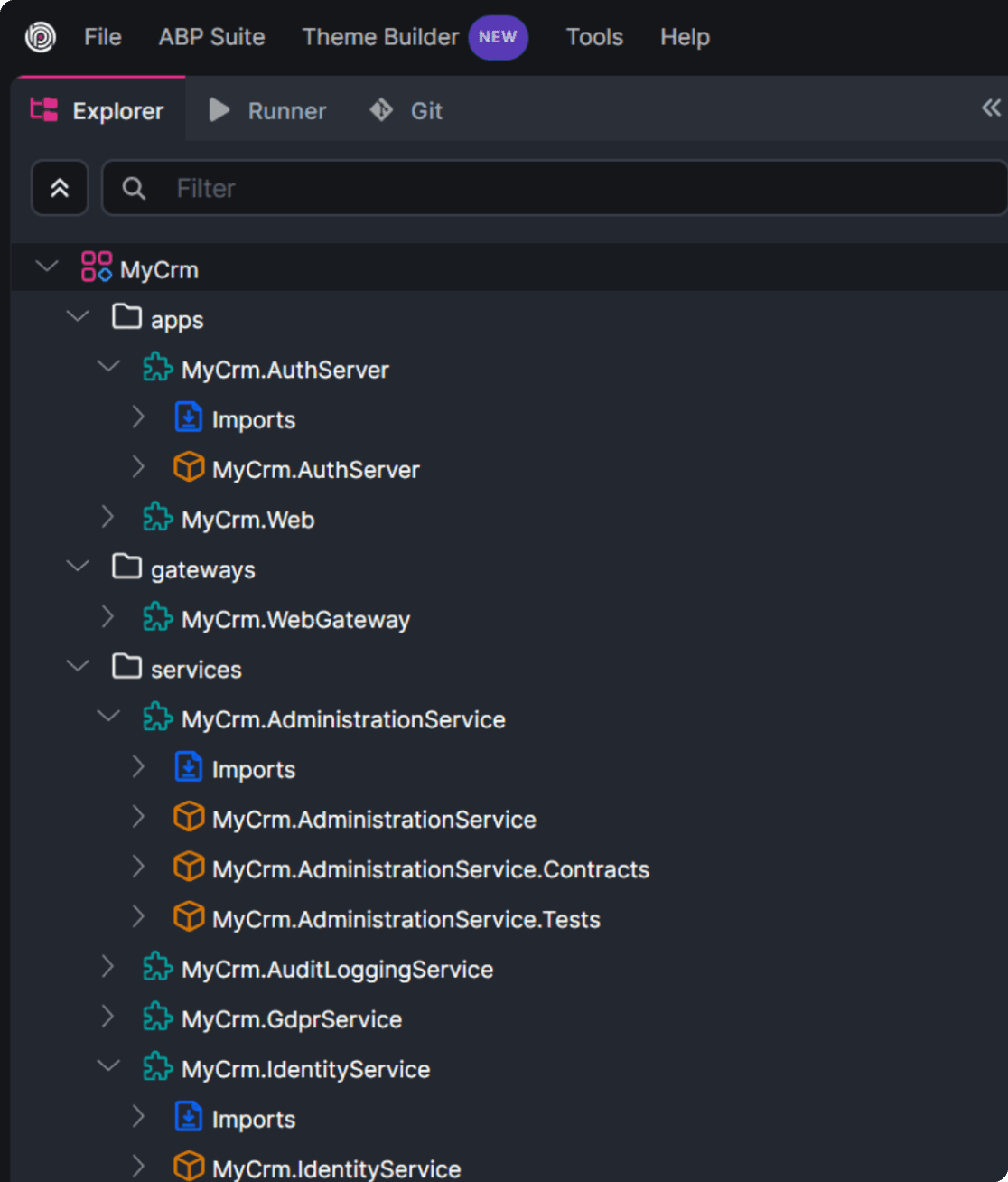
Find the new Theme Builder right in the ABP Studio menu. Pick a theme, see a live preview as you go, and apply it to your solution with a single click.
Git is a first-class tab in the ABP Studio sidebar. Pull, push, switch branches, work on issues and pull requests, and get help from ABP AI Agent without leaving your solution.
ABP AI Agent is your intelligent development companion built into ABP Studio. It understands your solution, helps you plan features, explore requirements, and generate code in context—so you can move from idea to implementation faster without switching tools or losing focus.