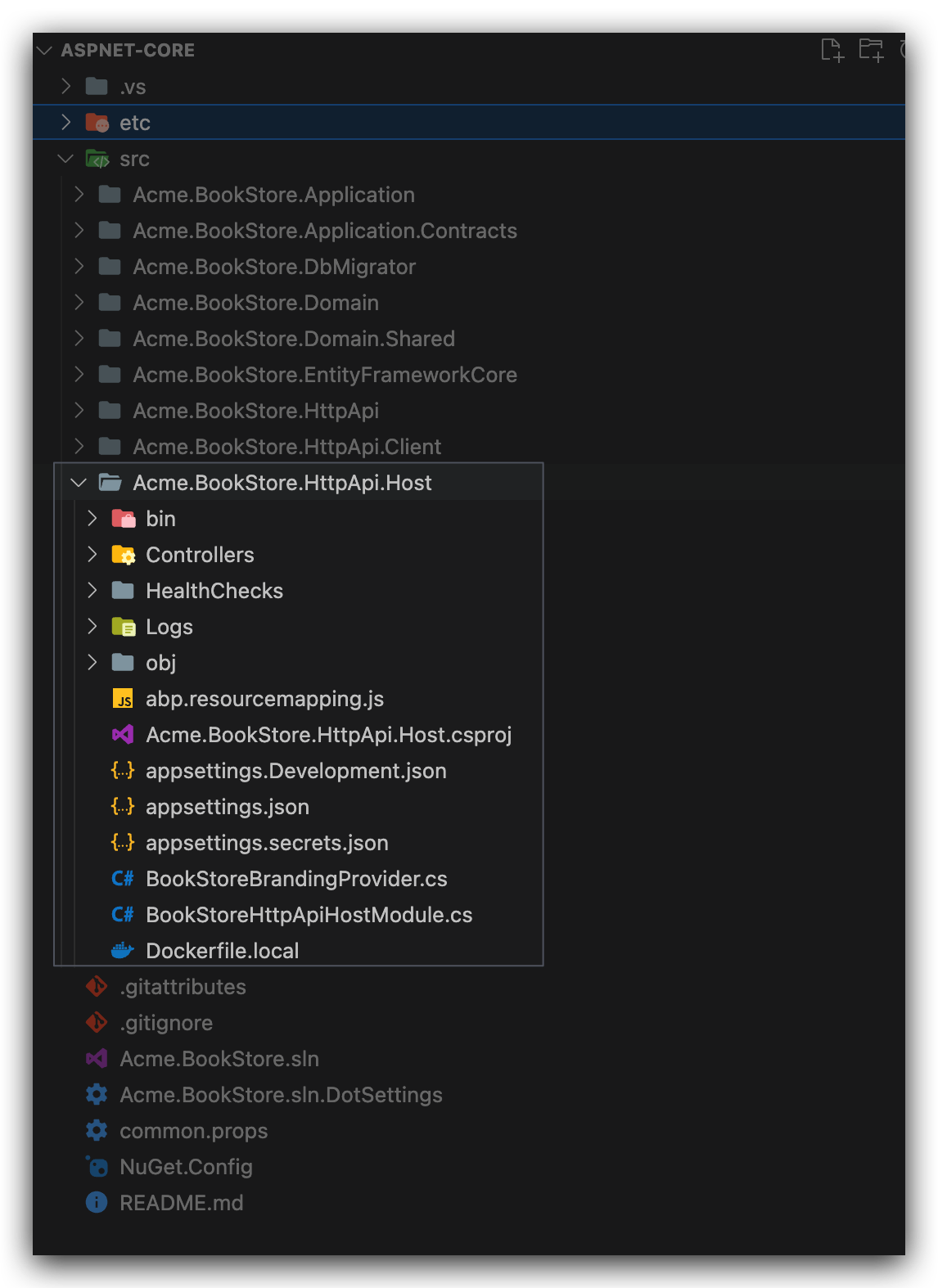
hi
I think it's possible., You can override it to try.
hi arvind.srivastava.tas
You can refer to the OrganizationUnit implementation for your needs. It filters sub-items by code
// <summary>
/// Hierarchical Code of this organization unit.
/// Example: "00001.00042.00005".
/// This is a unique code for an OrganizationUnit.
/// It's changeable if OU hierarchy is changed.
/// </summary>
public virtual string Code { get; internal set; }
https://github.com/abpframework/abp/blob/dev/modules/identity/src/Volo.Abp.Identity.Domain/Volo/Abp/Identity/OrganizationUnit.cs https://github.com/abpframework/abp/blob/dev/modules/identity/src/Volo.Abp.Identity.Domain/Volo/Abp/Identity/OrganizationUnitManager.cs#L151
and you also check the code from https://github.com/maliming/Owl.GeneralTree
hi
Can you share a simple project to reproduce?
liming.ma@volosoft.com
Thanks.
hi
options.UserFriendlyEnums();
private static void ConfigureSwagger(ServiceConfigurationContext context, IConfiguration configuration)
{
    context.Services.AddAbpSwaggerGenWithOAuth(
        configuration["AuthServer:Authority"]!,
        new Dictionary<string, string>
        {
                {"BookStore", "BookStore API"}
        },
        options =>
        {
            options.SwaggerDoc("v1", new OpenApiInfo { Title = "BookStore API", Version = "v1" });
            options.DocInclusionPredicate((docName, description) => true);
            options.CustomSchemaIds(type => type.FullName);
            options.UserFriendlyEnums();
        });
}
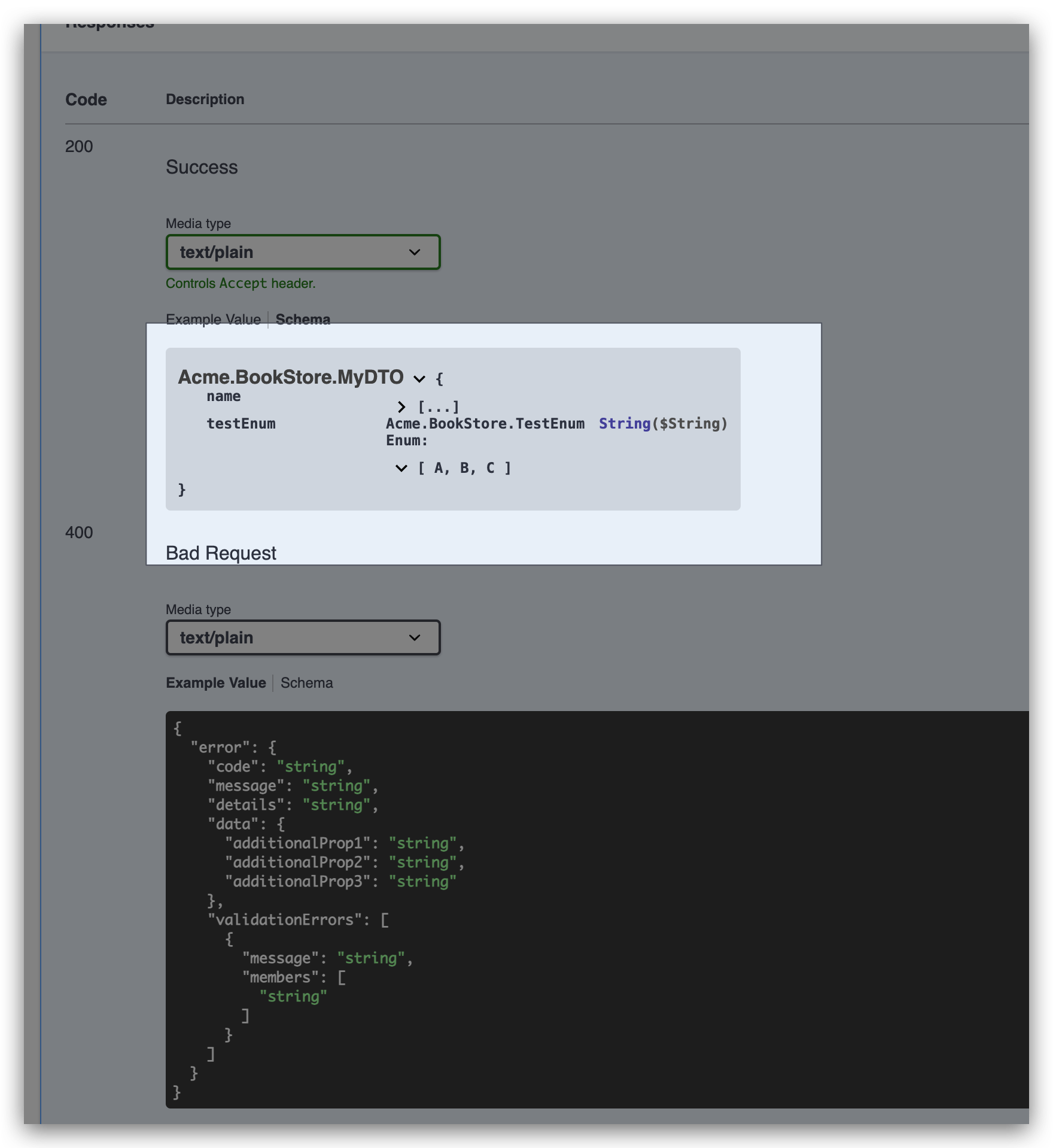
hi
Please change your OnApplicationInitialization method by follow:
public override void OnApplicationInitialization(ApplicationInitializationContext context)
{
    var env = context.GetEnvironment();
    var app = context.GetApplicationBuilder();

    if (env.IsDevelopment())
    {
        app.UseDeveloperExceptionPage();
    }

    app.UseAbpRequestLocalization();

    if (!env.IsDevelopment())
    {
        app.UseErrorPage();
        app.UseHsts();
    }

    app.UseCorrelationId();
    app.UseAbpSecurityHeaders();
    app.UseStaticFiles();
    app.UseRouting();
    app.UseAuthentication();
    app.UseAbpOpenIddictValidation();

    if (MultiTenancyConsts.IsEnabled)
    {
        app.UseMultiTenancy();
    }

    app.UseUnitOfWork();
    app.UseDynamicClaims();
    app.UseAuthorization();

    app.Use(async (httpContext, next) =>
    {
        var authenticateResultFeature = httpContext.Features.Get<IAuthenticateResultFeature>();
        if (authenticateResultFeature != null && authenticateResultFeature.AuthenticateResult == null)
        {
            if (httpContext.User.Identity?.IsAuthenticated == true)
            {
                authenticateResultFeature.AuthenticateResult = AuthenticateResult.Success(new AuthenticationTicket(httpContext.User, httpContext.User.Identity.AuthenticationType!));
            }
        }

        await next(httpContext);
    });

    app.UseSwagger();
    app.UseAbpSwaggerUI(options =>
    {
        options.SwaggerEndpoint("/swagger/v1/swagger.json", "AzureSignalRPoc API");
    });
    app.UseAuditing();
    app.UseAbpSerilogEnrichers();
    app.UseConfiguredEndpoints();
}
ok, I will check it asap.
hi
Please share the full error stack. Thanks.
Follow: https://github.com/Azure/azure-signalr/pull/1918
hi
This seems to be a problem with https://github.com/Azure/azure-signalr.
But you can try the code below to fix it.
app.UseAuthorization();

app.Use(async (httpContext, next) =>
{
    var authenticateResultFeature = httpContext.Features.Get<IAuthenticateResultFeature>();
    if (authenticateResultFeature != null && authenticateResultFeature.AuthenticateResult == null)
    {
        if (httpContext.User.Identity?.IsAuthenticated == true)
        {
            authenticateResultFeature.AuthenticateResult = AuthenticateResult.Success(new AuthenticationTicket(httpContext.User, httpContext.User.Identity.AuthenticationType!));
        }
    }

    await next(httpContext);
});

app.UseSwagger();
It seems there is no such file.