hi
Can you write it in English? Thanks
hi
in your http://localhost:44363/ project
hi
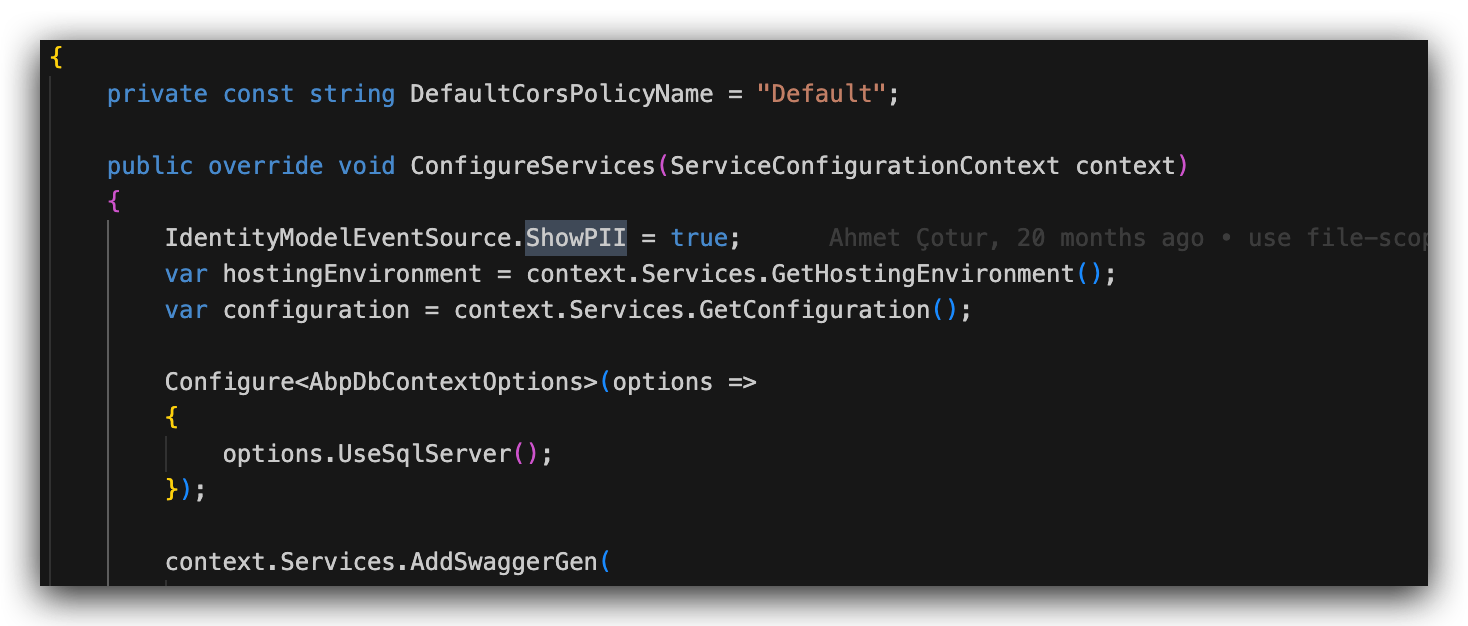
Please set IdentityModelEventSource.ShowPII = true; and reshare the error logs. Thanks
hi
The openiddict doesn't support API KEY related features.
You can implement your API KEY function, and abp will use claims to get the current user and tenant.
hi
Can you share a simple project to reproduce the above exception?
liming.ma@volosoft.com
hi
Please share the 500 error details.
You can check the logs.txt file.
hi
You add consider adding a factory method to resolve the IYourAppService.
Fake code:
context.Services.AddTransient<IIdentityUserAppService>(serviceProvider =>
{
    if (serviceProvider.GetRequiredService<IHttpContextAccessor>().HttpContext?.Request.IsHttps)
    {
        serviceProvider.GetRequiredService<IdentityUserAppService>();
    }
    return serviceProvider.GetRequiredService<MyIdentityUserAppService>();;
});
hi
Or this only works in the community version ABP?
It will also work on the commercial version.
AbpException: Could not find the bundle file '/_content/Blazorise.Bootstrap5/blazorise.bootstrap5.css' for the bundle 'Blazor.LeptonXTheme.Global'!
You can try without removing the blazorise package.
hi
The abp uses standard authentication of asp net core.
Thats mean you can use the asp net core way to implement your needs.
I'm wondering what would be best practice to implement such relationship and authentication using API KEY and authorization features?
You can check some articles and open-source projects.
https://www.google.com/search?q=asp+net+core+api+key+authentication
hi
I guess on the JwtBearerEvents method the authentication has not finished.
You can call the app service after app.UseAuthentication









