hi
For anonymous requests, there is no way to get the client ID.
The client id has to exist in a query string or form post.
You can try to inject the IHttpContextAccessor and call the GetOpenIddictServerRequest extension method.
var request = HttpContext.GetOpenIddictServerRequest()
but the OpenIddictServerRequest only exists in the openiddict request.
eg: connect/token or connect/authorize
hi
What is the process of your authentication?
After signing in to the website, you can get the client id.
Are you using the code flow to get token?
Thanks.
hi
Can you create a new question?
I will ask our Suite team.
Thanks.
Can you publish your project, compress the publish folder, and share it with liming.ma@volosoft.com?
> Cincaporc.WebApp.Web> dotnet publish
I will test in my local.
hi
Sorry, there is nothing we can share.
hi
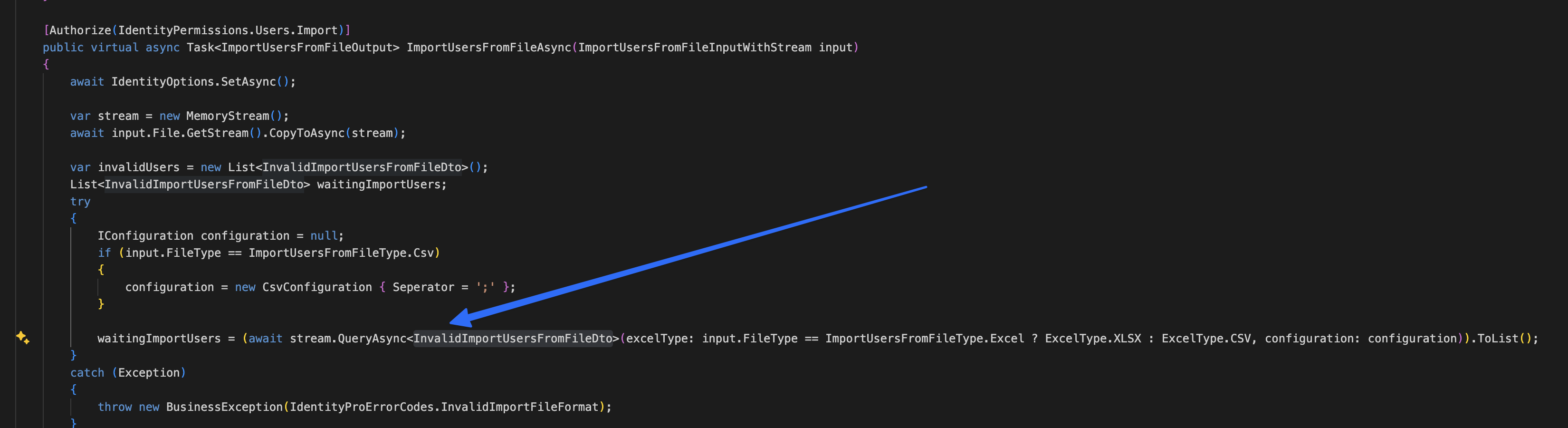
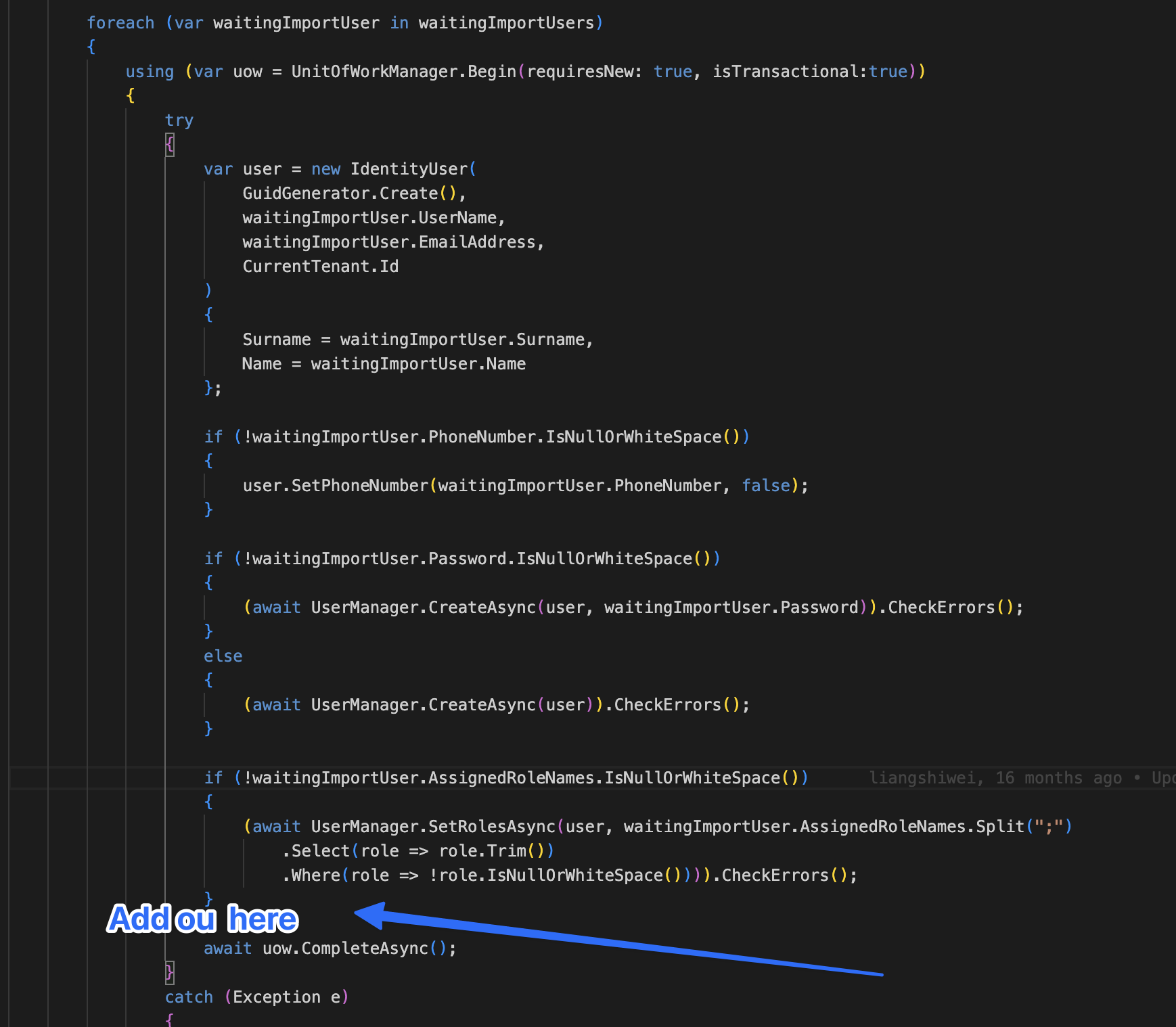
We will add the OU field to Excel or CSV in the next version.
For now. You can override the Volo.Abp.Identity.IdentityUserAppService's ImportUsersFromFileAsync method.
public class OuInvalidImportUsersFromFileDto :InvalidImportUsersFromFileDto
{
    public string AssignedoUNames { get; set; }
}
hi
I have consulted the relevant documents. Multiple Connections can be configured, but multiple EventBuses like the second point cannot be configured.
Which document you have checked?
I think you can override try to override the RabbitMqDistributedEventBus service to custom the logic.
The built in service doesn't support this case.
Thanks.
hi
I think your authserver indirectly dependent on openiddict domain module.
so you can inject the openiddict's repository.
authserver => EF core project => OpenIddict EF Core => OpenIddict Domain
hi
We are not using Figma and don't have experience with Figma.
sorry for that.
I have refunded your question ticket.









