You can check the login status, permissions, features..
var moduleMenu = new ApplicationMenuItem(
    MainSettingMenus.Prefix,
    context.GetLocalizer<MainSettingResource>()["Menu:MainSetting"],
    "~/MainSetting",
    icon: "fas fa-cogs"
    )
    .RequireAuthenticated()
    .RequirePermissions(CmsKitAdminPermissions.GlobalResources.Default)
    .RequireFeatures()
    .RequireGlobalFeatures();
It seems that not all packages have been upgraded to 7.0. Please check the other packages.
or you can share your project with me. liming.ma@volosoft.com
hi
https://docs.abp.io/en/abp/latest/Features#defining-the-features
hi
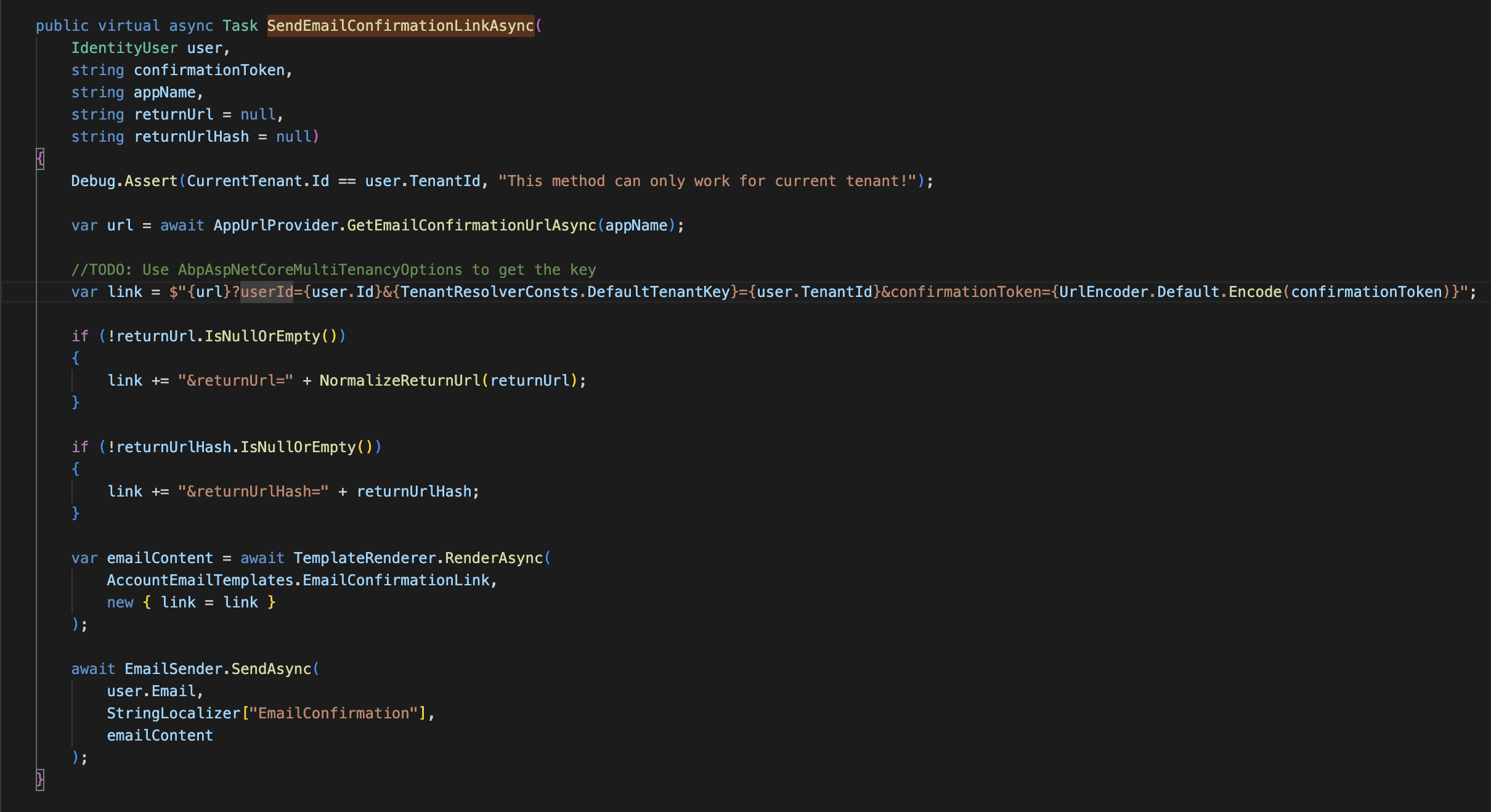
You can override the SendEmailConfirmationLinkAsync method of AccountEmailer(account/src/Volo.Abp.Account.Pro.Public.Application/Volo/Abp/Account/Emailing/AccountEmailer.cs)
Implementing Passwordless Authentication in ASP.NET Core Identity
You can pass an access_token to angular, and then complete the login. The angular team will reply to you.
eg: http://localhost:4200?token=abcedfg
Is there any documentation for this seeding (permission and localization) data for microservices using administration service db connection string.
At present, you can refer to these two documents.
https://docs.abp.io/en/abp/latest/Data-Seeding https://docs.abp.io/en/abp/latest/Connection-Strings
When I try to seed Localization data to administration microservice database I get this exception.
Can you share your steps and code?
Also another issue is I am unable to overwrite localization strings for OpenIddict Module . I used this guide https://docs.abp.io/en/abp/7.0/Localization to overwrite .
We have a sample. https://github.com/abpframework/abp-samples/tree/master/DocumentationSamples/ExtendLocalizationResource
hi
The MemoryCache will work after disabling the Redis.
context.Services.AddMemoryCache();
context.Services.AddDistributedMemoryCache();
hi
Configure<CmsKitCommentOptions>(options =>
{
    options.EntityTypes.Add(new CommentEntityTypeDefinition("SampleArticle"));
});
https://docs.abp.io/en/abp/latest/Modules/Cms-Kit/Comments
hi
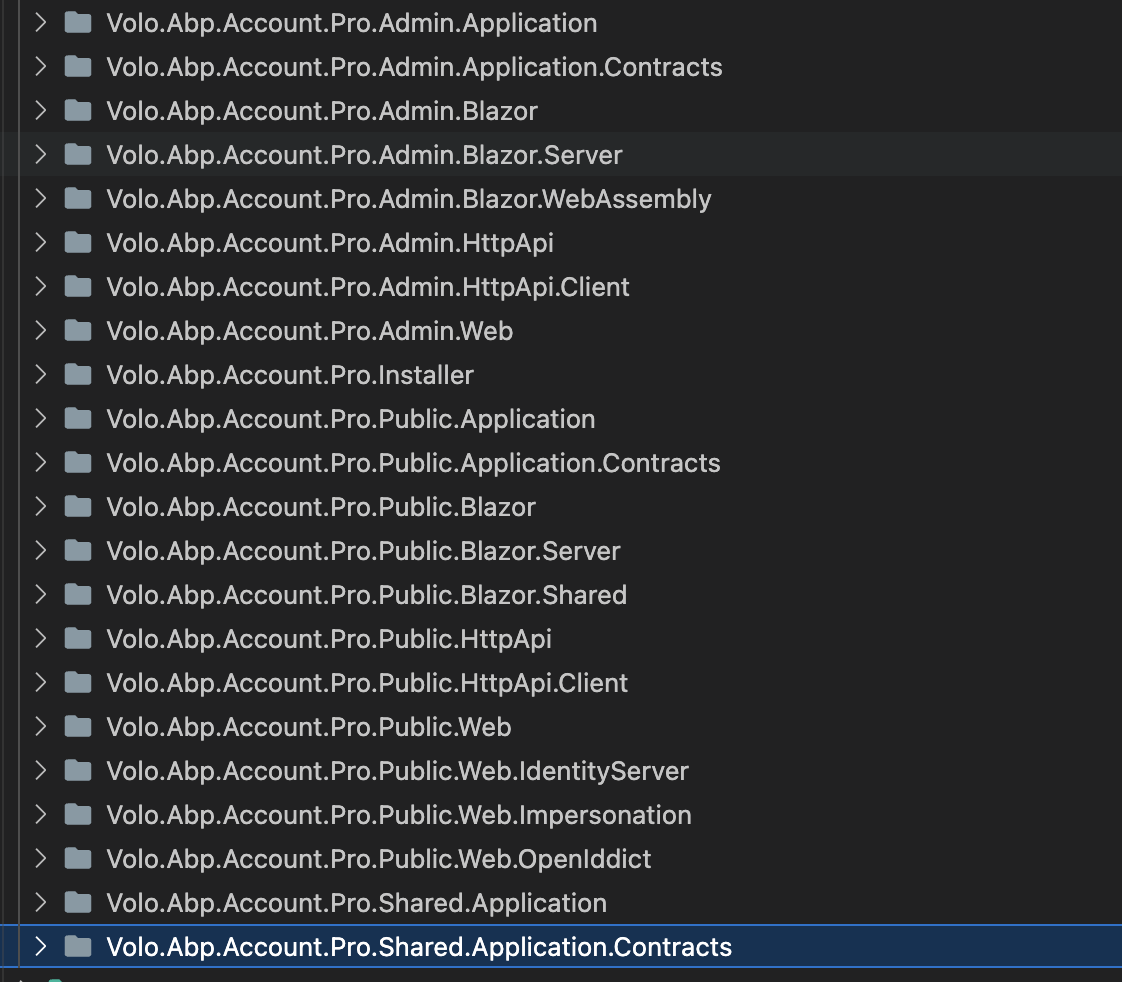
You should use **account pro **packages in your project. You are using the free opensource account module.
hi
You only need to replace them in your Microservices project.









