Thank you,
Meaning that G provider will apply to all tenants unless overwritten on a T level
Hi,
Just to check
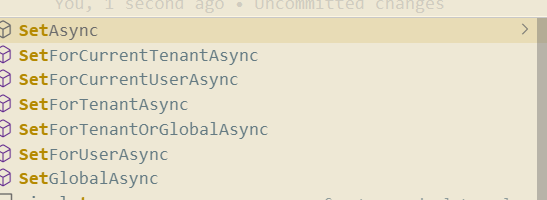 SetGlobalAsync -> will set for host level?
Then SetForTenantAsync / SetForCurrentTenantAsync -> will set for tenant level? What if SetForCurrentTenant is used while logged in as Host? Will it set for Host? Thanks
Thank you for providing more details. As mentioned in the documentation, you can specify the version for this case https://abp.io/docs/latest/CLI#get-source
Hello, I tried to download v8.3.0 but am getting an error
abp get-source Volo.Abp.Gdpr --version 8.3.0
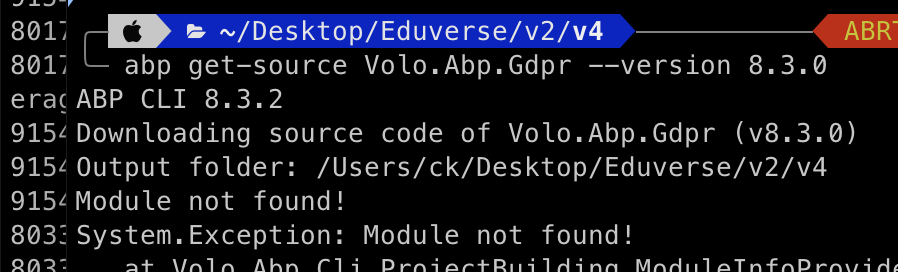
This part should be working the same for the cli as well. Can you please share the related package.json that has been generated for the gdpr project? May I also know your cli version?
My main project is on abp 8.x.x. Maybe that's why. Is there a way to download the old gdpr versions?
I'm on ABP CLI 8.3.2
this is the package.json for the code generated:
{ "name": "@volo/abp.ng.gdpr", "version": "9.0.1", "dependencies": { "@abp/ng.components": "~9.0.1", "@abp/ng.theme.shared": "~9.0.1", "@volo/abp.commercial.ng.ui": "^9.0.1", "tslib": "^2.3.0" }, "publishConfig": { "access": "public" }, "homepage": "https://abp.io", "repository": { "type": "git", "url": "https://github.com/volosoft/volo.git" }, "license": "LGPL-3.0", "keywords": [ "aspnetcore", "boilerplate", "framework", "web", "best-practices", "angular", "maui", "blazor", "mvc", "csharp", "webapp" ] }
Hello, this part has been refactored and fixed in the next version being 9.0 with this PR https://github.com/abpframework/abp/pull/21197
Thanks for the reply, so when is the refactored version available on the abp cli?
Hi i've downloaded the angular gdpr source code using abp get-source Volo.Abp.Gdpr
However am facing some issues on the extensions.resolver.ts file
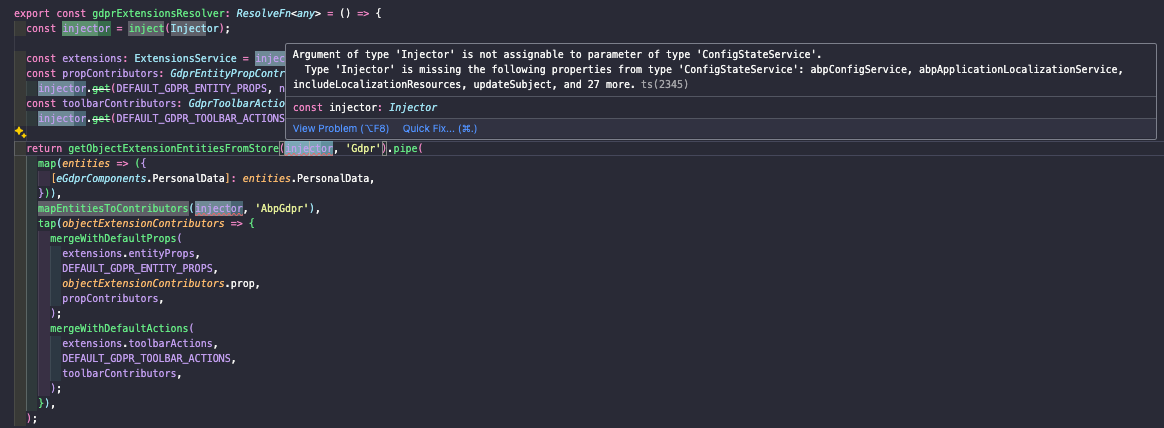
 Please advise
Hi
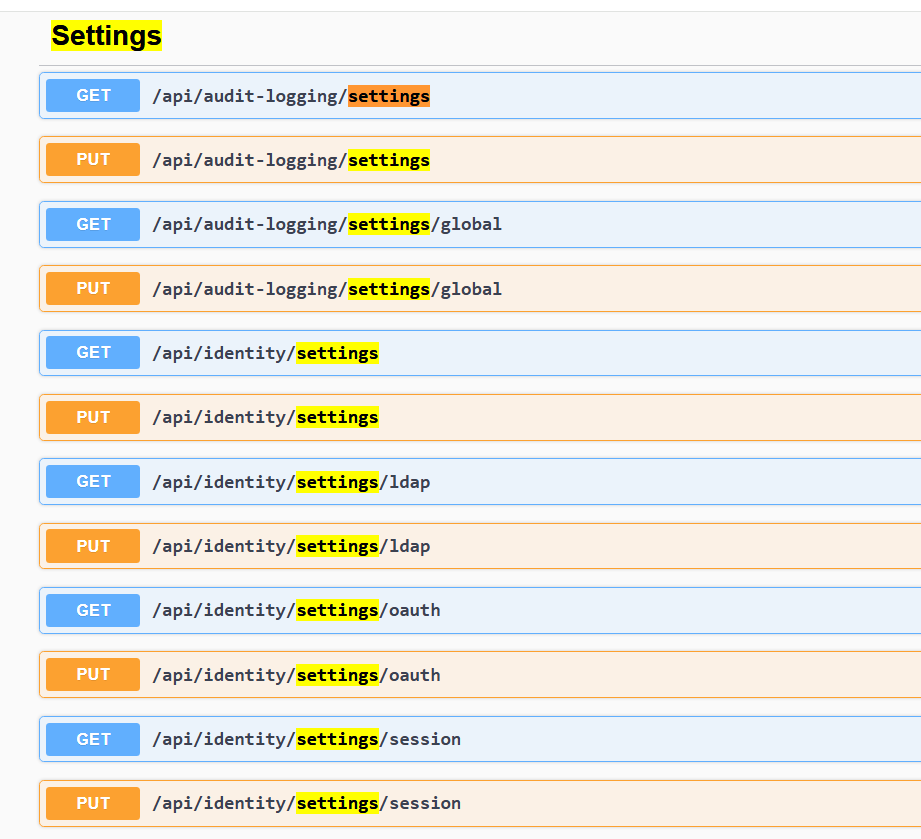
Are you able to point me to the source code for controller method for settings/oauth? I assume inside the controller method it would call some service like settingsProvider.setAsync('Llm.Url', newValue) but i might be mistaken
Hi
I noted that setting provider does not have setter methods (https://github.com/abpframework/abp/blob/dev/framework/src/Volo.Abp.Settings/Volo/Abp/Settings/ISettingProvider.cs)
What service can i use to set the values of the setting? Thank you
https://abp.io/docs/latest/framework/ui/angular/settings#how-to-get-a-specific-setting
Thanks, I will use the above link to get a value from the backend. Is there also a way to set a value using the this.config? Thanks
Okay will pick up on the UI part later on
For the settings defined in the BE, how do we retrieve the values and avaialble settings?
e.g assuming I create the Llm.Url setting, how would my frontend be able to know that there is such a setting "Llm.Url" and retrieve its value? In the swagger UI it seems like there is no api for the user-defined settings names / values