I'll check the team milestone and inform you
Hi,
I showed BasicTheme as an example, you can always replace source-code of LeptonX theme, too. You can add project reference of customized theme to 2 different applications and they can use the same customized version of the theme.
It isn't important if the solution is created by ABP Studi or not, you can still get the source code of the theme by using ABP CLI:
abp get-source Volo.Abp.LeptonXTheme
If you consider using ABP Studio with your older solutions are not created with ABP Studio you can initialize them in ABP Studio by following "File > Initialize Existing Solution" menu item.
We are looking for the cleanest and most maintainable integration approach moving forward.
If you build your own theme and use it everywhere, you can pack you theme as nuget package and push to your private nuget. And your applications use your custom theme with package reference, in that way, even you made a breaking-change, you shouldn't update all the applications immdediately that uses your theme, they can still stay the previous version until you'll apply the breaking-change on them.
You should be able to see them in the table on Text Templates page if you properly implemented IDynamicTemplateDefinitionStore. The module gets them from dynamic store and merges with static store.
You can also put a breakpoint to DynamicTemplateDefinitionAppService's GetAllAsync method to make sure it's executed. If not, check if it's located in the correct layer and make sure it's registered to dependency injection well.
You may consider using [ExposeServices] attribute to make sure it's registered properly like this:
[Dependency(ReplaceServices = true)]
[ExposeServices(typeof(IDynamicTemplateDefinitionStore))]
public class DatabaseTemplateDefinitionStore : IDynamicTemplateDefinitionStore, ITransientDependency
{
    // ...
}
You can check LeptonX demo to find a proper component. All the components from this website is done in LeptonX, you can directly get the HTML code and make it work in your application:
By the way, the component from the screenshot is AbpPageSearchBoxViewComponent from ABP Framework: https://github.com/abpframework/abp/blob/dev/framework/src/Volo.Abp.AspNetCore.Mvc.UI.Theme.Shared/Pages/Shared/Components/AbpPageSearchBox/Default.cshtml
You can easily render it in your page like below:
@await Component.InvokeAsync(typeof(AbpPageSearchBoxViewComponent))
Make sure the following using statement is added:
@using Volo.Abp.AspNetCore.Mvc.UI.Theme.Shared.Pages.Shared.Components.AbpPageSearchBox
Hi,
Sorry to hear that. Probably it's a false-positive error. We heard some warnings related to ABP Studio but Suite. Can you try removing it and install standalone without using ABP Studio?
dotnet tool uninstall -g volo.abp.suite
dotnet tool install -g volo.abp.suite
And then, do not use ABP Studio CLI, run abp suite directly by executing abp-suite command:
abp-suite
In the latest dev branch we're using the latest 1.7.6 version of blazorise:
https://github.com/abpframework/abp/blob/f671053ebd3698711e9b05675bceac8c86696efa/Directory.Packages.props#L21-L24
But it isn't shipped to you yet because of release cycles, it'll be delivered with ABP v9.2
If you wish, you can replace source code by using ABP CLI too: https://abp.io/docs/latest/cli#add-source-code
Hi,
If you build a complete custom website, I can suggest to you downloading source code of the theme and use it with local references from your application. Maybe Basic Theme may suits you better for customization purposes since it's built on top of the plain bootstrap no custom styles on it.
ABP Studio makes it in an easy way, just right click the theme module from Dependencies tree, and choose Replace with Source Code option:
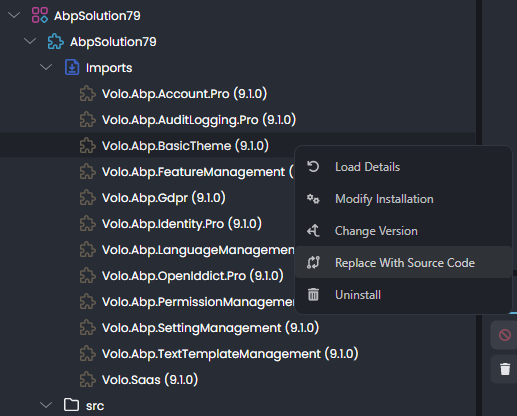
If you have LeptonXTheme, right click to the LeptonX theme module.
This action will download the source code and add it to your solution. You can directly change theme layout, menu items, header, footer or whatever you wish in the theme project without overriding from your main application.
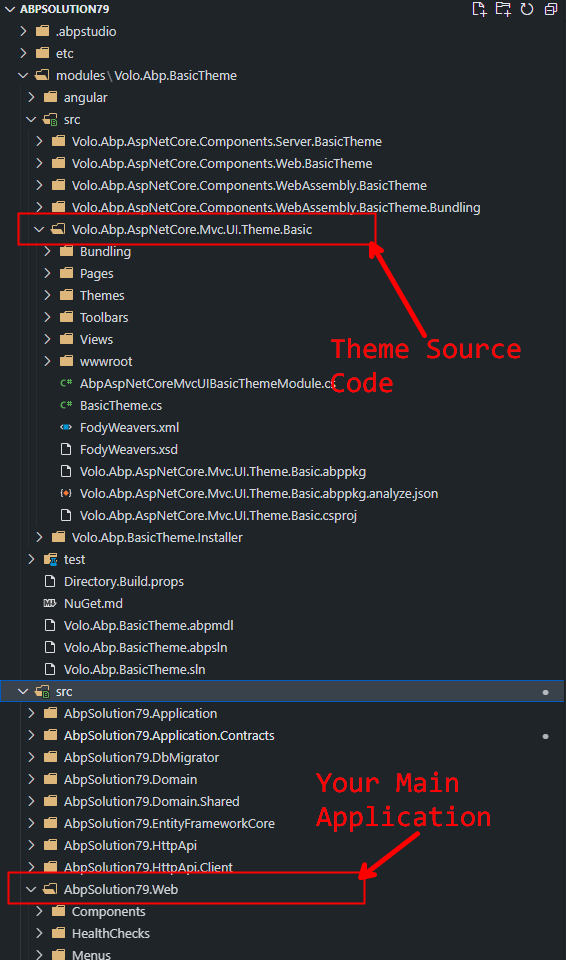
You can also implement new layouts according to your requirement by inspiring previously implemented layouts, that can make your development process much more faster
Hi,
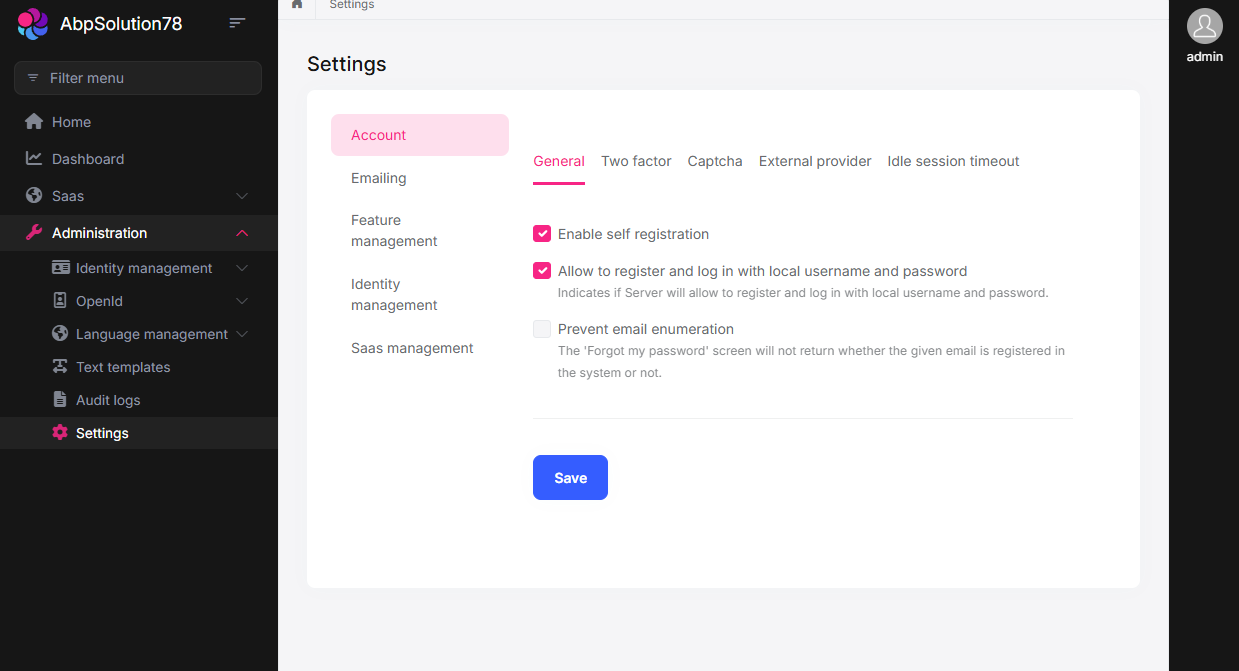
Can you provide more information? Which search feature do you mention?
Hi,
ITextTemplateDefinitionManager is implemented here:
https://github.com/abpframework/abp/blob/605482916e6f87b75d5a23a76ba2299fb72c9306/framework/src/Volo.Abp.TextTemplating.Core/Volo/Abp/TextTemplating/TemplateDefinitionManager.cs#L9
And it uses IStaticTemplateDefinitionStore and IDynamicTemplateDefinitionStore.
And Dynamic one doesn't have any real implementation. The NullIDynamicTemplateDefinitionStore was resolved when injected:
https://github.com/abpframework/abp/blob/605482916e6f87b75d5a23a76ba2299fb72c9306/framework/src/Volo.Abp.TextTemplating.Core/Volo/Abp/TextTemplating/NullIDynamicTemplateDefinitionStore.cs#L9
You may implement your own DynamicTemplateDefinitionStore class by implementing IDynamicTemplateDefinitionStore interface that writes/read from a database table.
Something like that:
public class DatabaseTemplateDefinitionStore : IDynamicTemplateDefinitionStore, ITransientDependency
{
    protected IRepository<TemplateDefinitionEntity, Guid> TemplateDefinitionRepository { get; }

    public DatabaseTemplateDefinitionStore(IRepository<TemplateDefinition, Guid> templateDefinitionRepository)
    {
        TemplateDefinitionRepository = templateDefinitionRepository;
    }

    public async Task<TemplateDefinition> GetAsync(string name)
    {
        var entity = await TemplateDefinitionRepository.GetAsync(name);
        return MapToTemplateDefinitionAsync(entity); // Map to TemplateDefinition in your own way
    }

    public async Task<IReadOnlyList<TemplateDefinition>> GetAllAsync()
    {
        var list = await TemplateDefinitionRepository.GetListAsync();
        return list.Select(MapToTemplateDefinitionAsync).ToImmutableList(); // Map to TemplateDefinition in your own way
    }

    public async Task<TemplateDefinition?> GetOrNullAsync(string name)
    {
        var entity = await TemplateDefinitionRepository.FindAsync(name);

        return entity == null ? null : MapToTemplateDefinitionAsync(entity); // Map to TemplateDefinition in your own way
    }

    private TemplateDefinition MapToTemplateDefinitionAsync(TemplateDefinitionEntity entity)
    {
        // Implement your mapping logic here
        return new TemplateDefinition(entity.Name, entity.LocalizationResourceName, entity.DisplayName, entity.IsLayout, entity.Layout, entity.RenderEngine, entity.Properties);
    }
}
And create another AppService that creates it at runtime:
public class DynamicTemplateDefinitionAppService : IDynamicTemplateDefinitionStore, ITransientDependency
{
    protected IRepository<TemplateDefinitionEntity, Guid> TemplateDefinitionRepository { get; }

    public DynamicTemplateDefinitionAppService(IRepository<TemplateDefinition, Guid> templateDefinitionRepository)
    {
        TemplateDefinitionRepository = templateDefinitionRepository;
    }

    public async Task CreateAsync(TemplateDefinitionDto input)
    {
        var entity = new TemplateDefinitionEntity(input.Name, input.LocalizationResourceName, input.DisplayName, input.IsLayout, input.Layout, input.RenderEngine, input.Properties);
        await TemplateDefinitionRepository.InsertAsync(entity);
    }

    // all other CRUD methods can be implemented similarly
}









