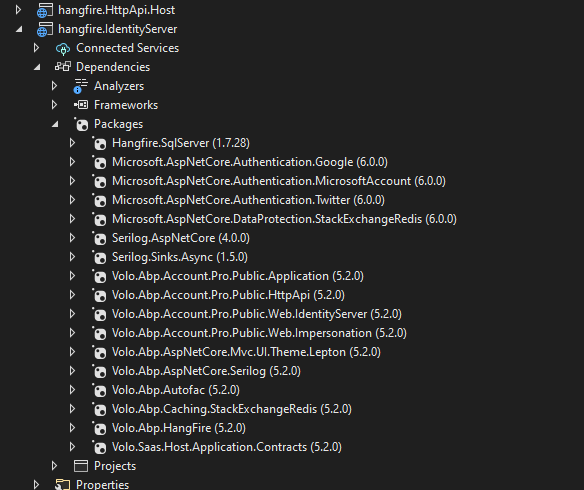
OU and roles are mainly used to organize permissions and your module should only need to the permission system dependency (it already has). These details are internals of the Identity module.
I think permission system dependency looks enough if you are building "policy based" authorization but not "row level" authorization.
Let's assume use case where we are adding query filters according users organization unit detail. We may want to the user access more or less data according to their hierarchy in the organizational unit. Policy authorized one end point should return all organizational units lookup values for assignment.
Let's define interface for this;
    public interface IHasAccessControl
    {
        public string OwnerId { get; }

        public string OrganizationId { get; }
    }
Implement interface to the Aggregate Root
public class Project : AuditedAggregateRoot<Guid>, IMultiTenant, IHasAccessControl
{
    public virtual string Name { get; protected set; }
    // ...
    public virtual Guid? TenantId { get; protected set; }
    public virtual string OwnerId { get; protected set; }
    public virtual string OrganizationId { get; protected set; }

    public virtual void SetOwnerId([NotNull] string ownerId)
    {

    }

    public virtual void SetOrganizationId([NotNull] string organizationId)
    {

    }
}
Let's add organization id information to the token.
public class OrganizationUnitPrincipalContributor : IAbpClaimsPrincipalContributor, ITransientDependency
{
    public async Task ContributeAsync(AbpClaimsPrincipalContributorContext context)
    {
        var identity = context.ClaimsPrincipal.Identities.FirstOrDefault();

        var userId = identity?.FindUserId();
        if (userId.HasValue)
        {
            var userService = context.ServiceProvider.GetRequiredService< IdentityUserManager >();

            var user = await userService.FindByIdAsync(userId.ToString());

            if (user != null)
            {
                user.OrganizationUnits
                    .Select(u => u.OrganizationUnitId).ToList()
                    .ForEach(unit => identity.AddClaim(new Claim(type: "organization_unit", value: unit.ToString())));
            }
        }
    }
}
Add short cut for identityServer (https://github.com/abpframework/abp/pull/7998)
Configure<AbpClaimsServiceOptions>(options =>
{
    options.RequestedClaims.AddRange(new[] { "organization_unit" });
});
1 commandBatches, IRelationalConnection connection, CancellationToken cancellationToken) at Microsoft.EntityFrameworkCore.Update.Internal.BatchExecutor.ExecuteAsync(IEnumerable1 commandBatches, IRelationalConnection connection, CancellationToken cancellationToken)
at Microsoft.EntityFrameworkCore.Update.Internal.BatchExecutor.ExecuteAsync(IEnumerable1 commandBatches, IRelationalConnection connection, CancellationToken cancellationToken) at Microsoft.EntityFrameworkCore.ChangeTracking.Internal.StateManager.SaveChangesAsync(IList1 entriesToSave, CancellationToken cancellationToken)
at Microsoft.EntityFrameworkCore.ChangeTracking.Internal.StateManager.SaveChangesAsync(StateManager stateManager, Boolean acceptAllChangesOnSuccess, CancellationToken cancellationToken)
at Microsoft.EntityFrameworkCore.SqlServer.Storage.Internal.SqlServerExecutionStrategy.ExecuteAsync[TState,TResult](TState state, Func4 operation, Func4 verifySucceeded, CancellationToken cancellationToken)
at Microsoft.EntityFrameworkCore.DbContext.SaveChangesAsync(Boolean acceptAllChangesOnSuccess, CancellationToken cancellationToken)
at Microsoft.EntityFrameworkCore.DbContext.SaveChangesAsync(Boolean acceptAllChangesOnSuccess, CancellationToken cancellationToken)
at Volo.Abp.EntityFrameworkCore.AbpDbContext1.SaveChangesAsync(Boolean acceptAllChangesOnSuccess, CancellationToken cancellationToken) --- End of inner exception stack trace --- at Volo.Abp.EntityFrameworkCore.AbpDbContext1.SaveChangesAsync(Boolean acceptAllChangesOnSuccess, CancellationToken cancellationToken)
at Volo.Abp.Uow.UnitOfWork.SaveChangesAsync(CancellationToken cancellationToken)
at Volo.Abp.Uow.UnitOfWork.CompleteAsync(CancellationToken cancellationToken)
at Volo.Abp.AspNetCore.Mvc.Uow.AbpUowActionFilter.OnActionExecutionAsync(ActionExecutingContext context, ActionExecutionDelegate next)
at Microsoft.AspNetCore.Mvc.Infrastructure.ControllerActionInvoker.<InvokeNextActionFilterAsync>g__Awaited|10_0(ControllerActionInvoker invoker, Task lastTask, State next, Scope scope, Object state, Boolean isCompleted)
at Microsoft.AspNetCore.Mvc.Infrastructure.ControllerActionInvoker.Rethrow(ActionExecutedContextSealed context)
at Microsoft.AspNetCore.Mvc.Infrastructure.ControllerActionInvoker.Next(State& next, Scope& scope, Object& state, Boolean& isCompleted)
at Microsoft.AspNetCore.Mvc.Infrastructure.ControllerActionInvoker.<InvokeInnerFilterAsync>g__Awaited|13_0(ControllerActionInvoker invoker, Task lastTask, State next, Scope scope, Object state, Boolean isCompleted)
at Microsoft.AspNetCore.Mvc.Infrastructure.ResourceInvoker.<InvokeNextExceptionFilterAsync>g__Awaited|26_0(ResourceInvoker invoker, Task lastTask, State next, Scope scope, Object state, Boolean isCompleted)There is a nice documentation and blog post on how to check concurrency (https://docs.abp.io/en/abp/latest/Concurrency-Check), but there is no example on how to resolve conflicts manually. I don't understand how we can access the "values" (values on db, submitted data etc) in case of conflict.
The SaveChangesAsync() function throws AbpDbConcurrencyException not DbUpdateConcurrencyException
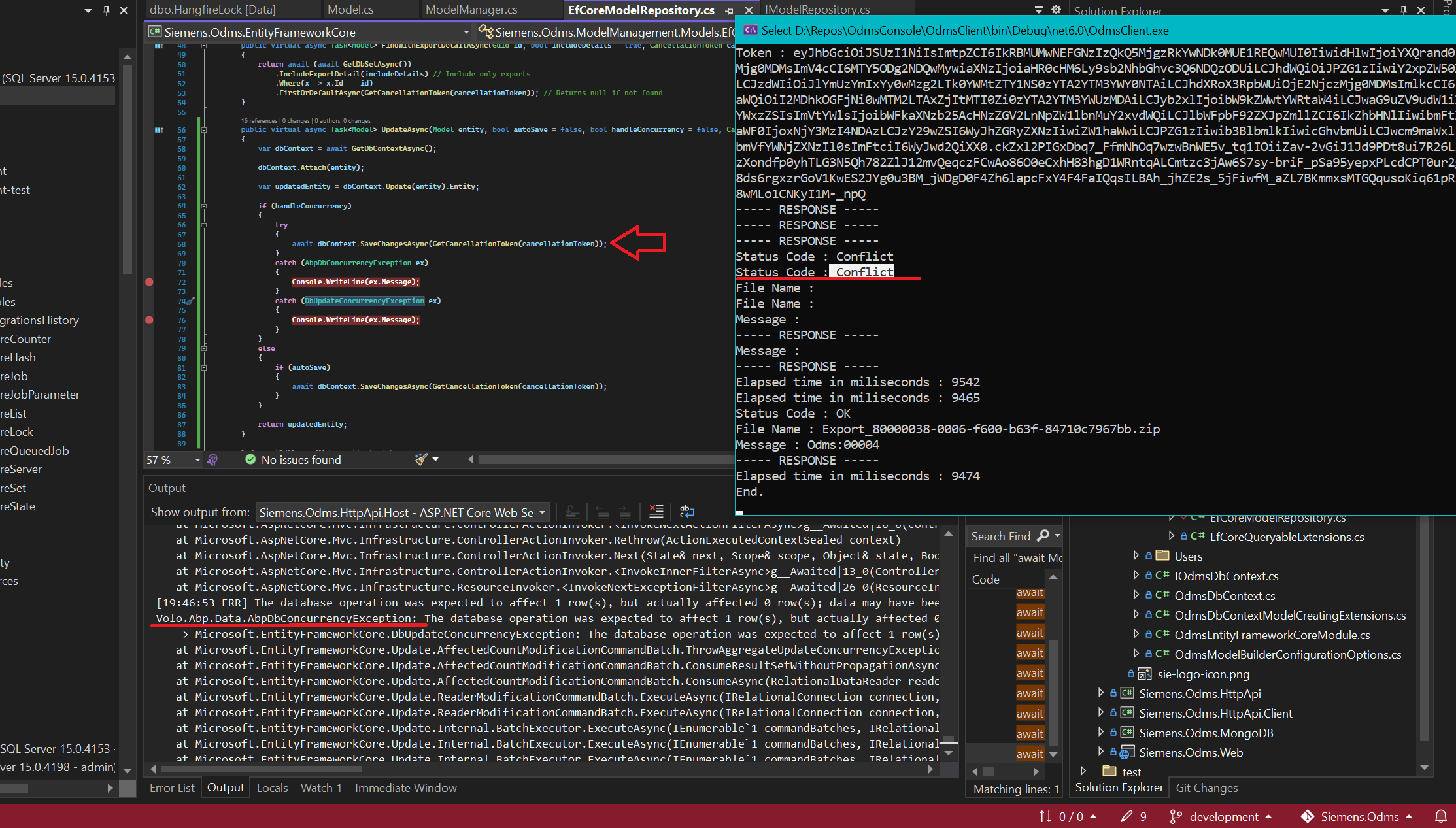
The AbpDbConcurrencyException class does not derive from the DbUpdateConcurrencyException class.
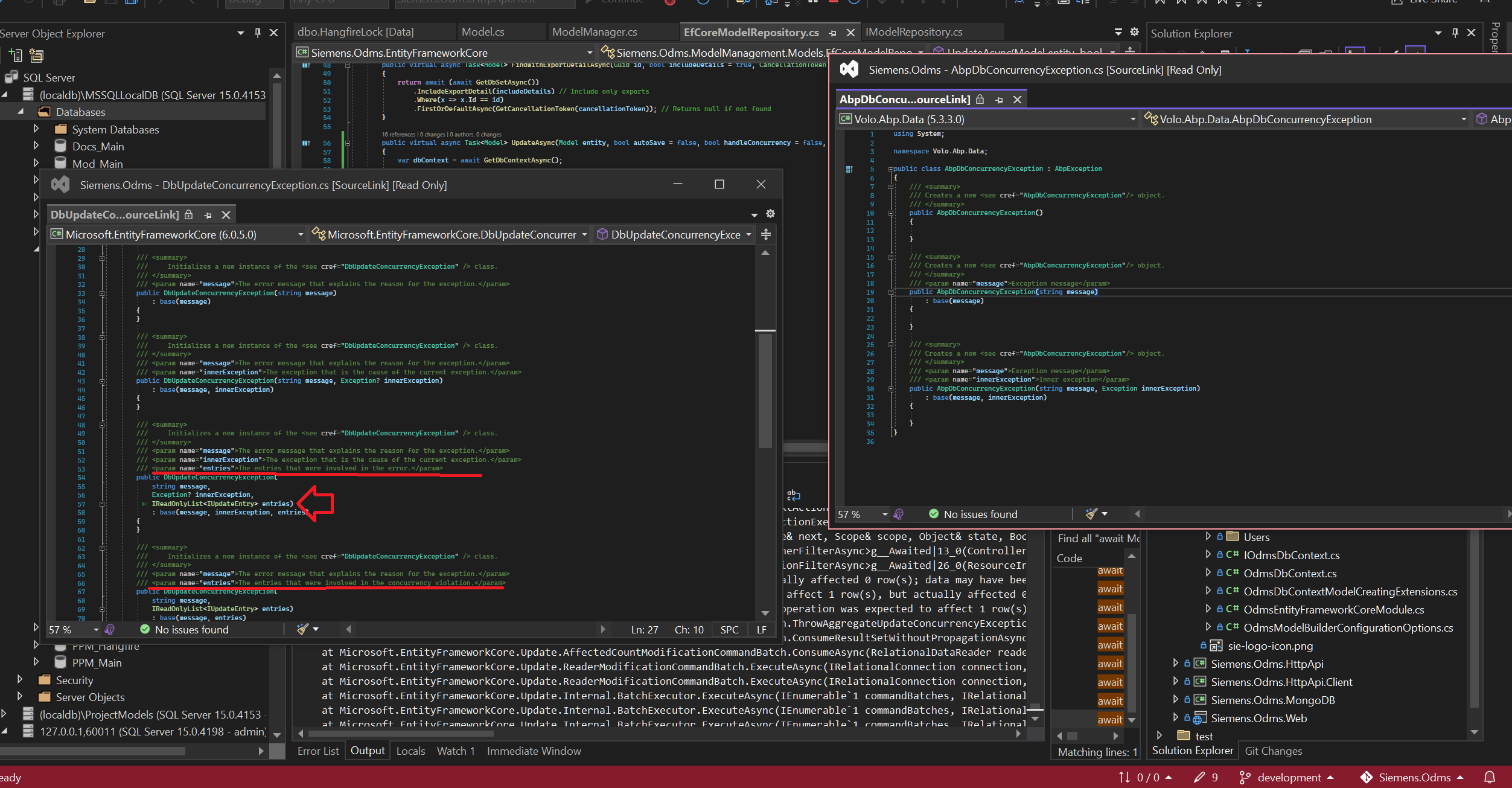
For this reason, I cannot access the Current/Original/Database values of the entity. (https://learn.microsoft.com/en-us/ef/core/saving/concurrency#resolving-concurrency-conflicts)
Can you share an example about the resolving concurrency conflicts ? Existing framework documentation doesn't provide any info resolving concurrency.
Ok thx after login it is working again, but I didn't perform any "log out" operation ? Do we need to refresh our login time to time ? Is there any kind of necessity ?
login-info returns with null values
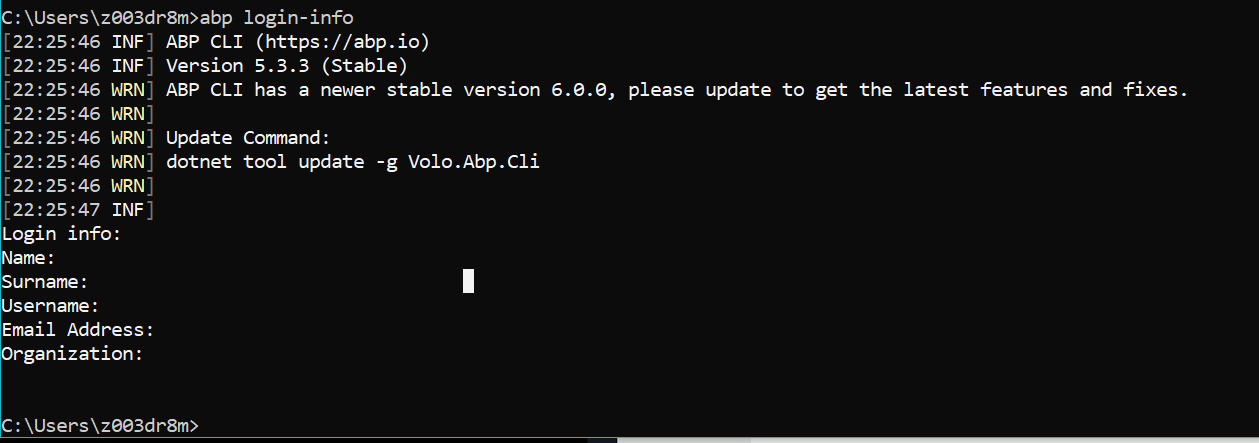
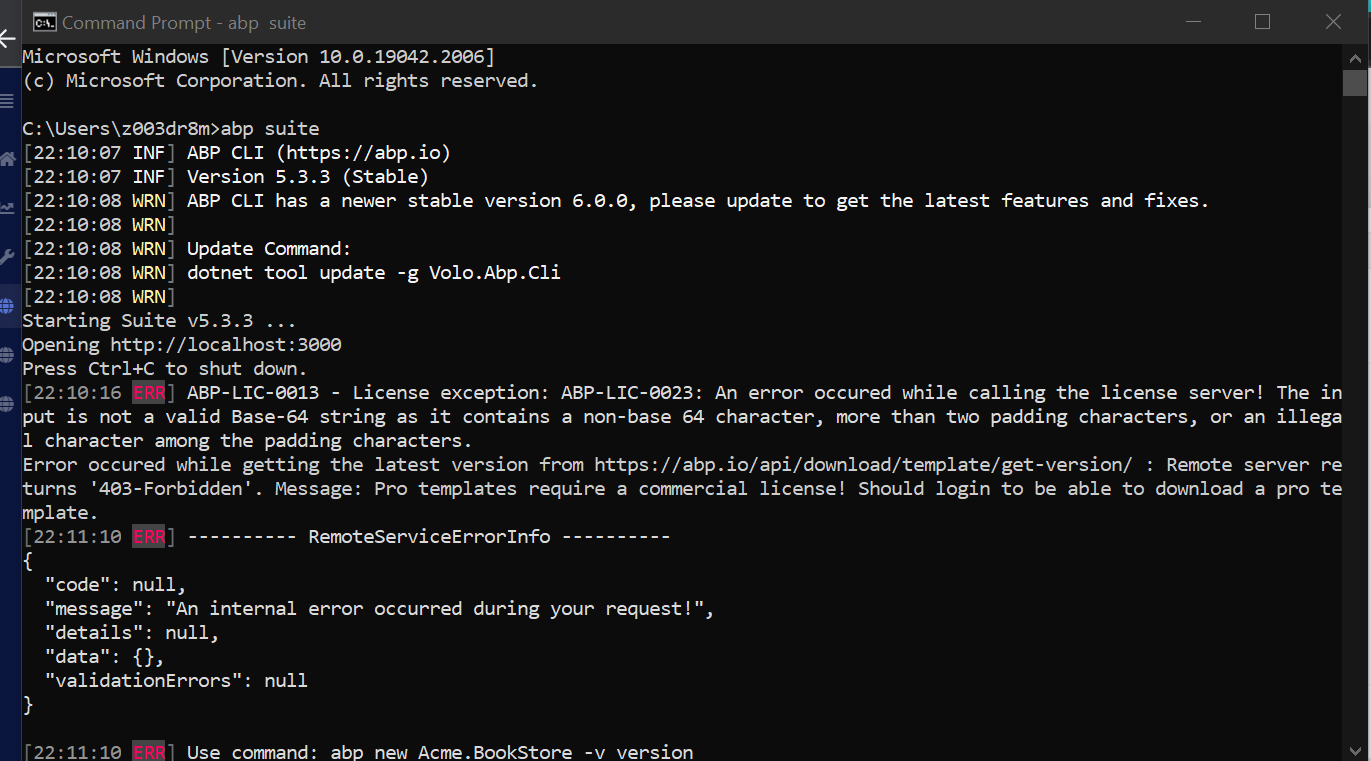
ABP-LIC-0013 - License exception: ABP-LIC-0023: An error occured while calling the license server! The input is not a valid Base-64 string as it contains a non-base 64 character, more than two padding characters, or an illegal character among the padding characters. Error occured while getting the latest version from https://abp.io/api/download/template/get-version/ : Remote server returns '403-Forbidden'. Message: Pro templates require a commercial license! Should login to be able to download a pro template.
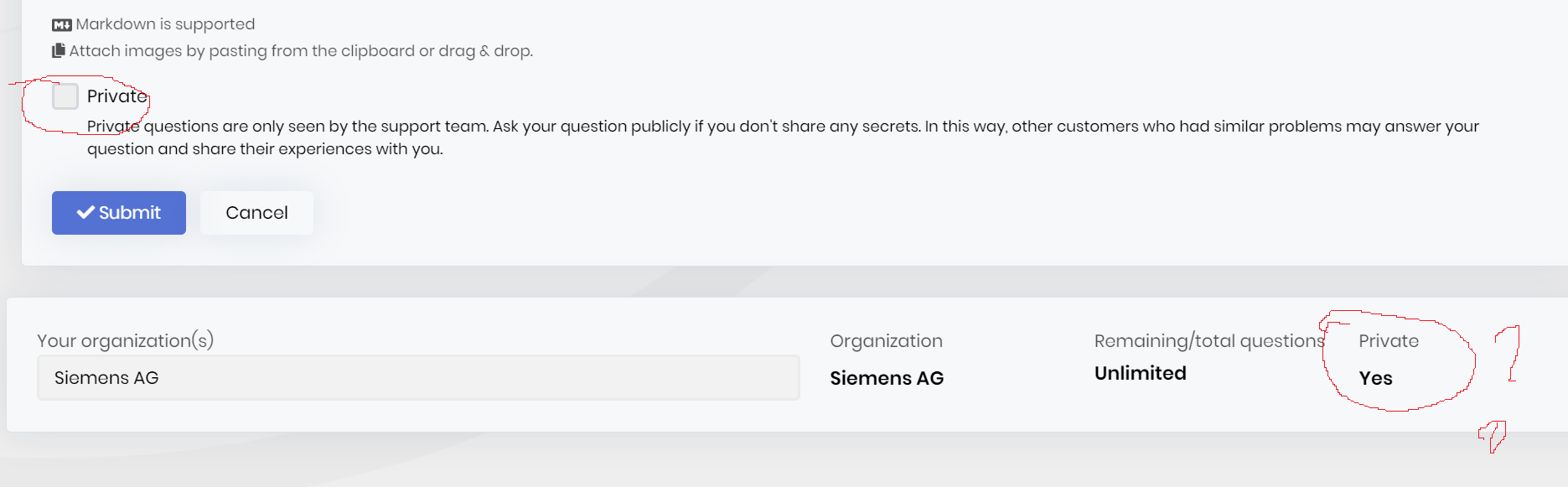
And also is this UI issue ? Why we can't set status to non-private ?
Thanks for the information. It's really easy to override. Thanks for abp modularization.
What I want to understand is whether this change will cause a problem in the operation of template engines (razor, scribian).
Do i need to consider to check AbpTextTemplatingScribanModule or AbpTextTemplatingRazorModule as well ?
ABP Framework version: v5.3.3
UI type: MVC
DB provider: EF Core
Tiered (MVC) or Identity Server Separated (Angular): yes
Exception message and stack trace:
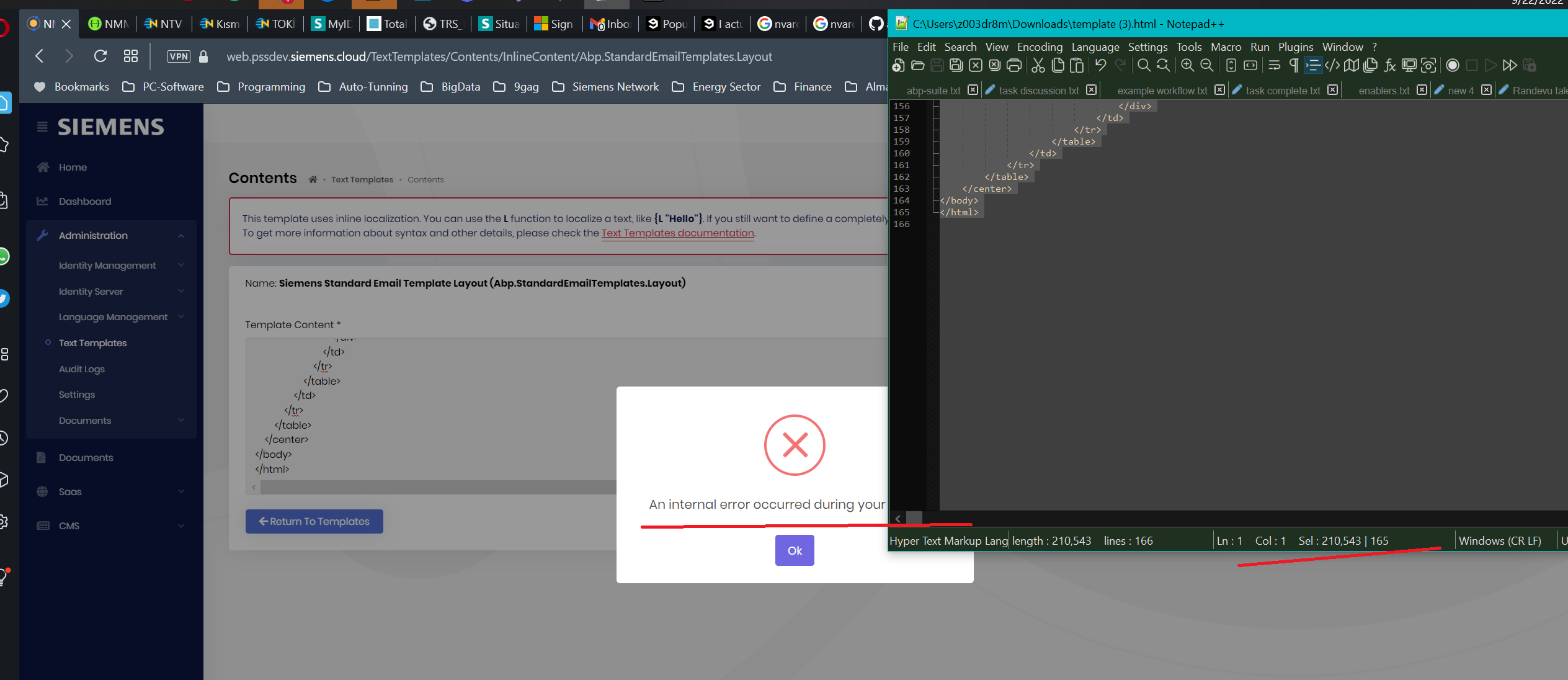
2022-09-21 12:35:43.088 +00:00 [ERR] content length must be equal to or lower than 65535! (Parameter 'content')
System.ArgumentException: content length must be equal to or lower than 65535! (Parameter 'content')
at Volo.Abp.Check.NotNullOrWhiteSpace(String value, String parameterName, Int32 maxLength, Int32 minLength) in D:\ci\Jenkins\workspace\abp-framework-release\abp\framework\src\Volo.Abp.Core\Volo\Abp\Check.cs:line 82
at Volo.Abp.TextTemplateManagement.TextTemplates.TextTemplateContent.SetContent(String content)
at Volo.Abp.TextTemplateManagement.TextTemplates.TextTemplateContent..ctor(Guid id, String name, String content, String cultureName, Nullable1 tenantId) at Volo.Abp.TextTemplateManagement.TextTemplates.TemplateContentAppService.UpdateAsync(UpdateTemplateContentInput input) at Castle.DynamicProxy.AsyncInterceptorBase.ProceedAsynchronous[TResult](IInvocation invocation, IInvocationProceedInfo proceedInfo) at Volo.Abp.Castle.DynamicProxy.CastleAbpMethodInvocationAdapterWithReturnValue1.ProceedAsync() in D:\ci\Jenkins\workspace\abp-framework-release\abp\framework\src\Volo.Abp.Castle.Core\Volo\Abp\Castle\DynamicProxy\CastleAbpMethodInvocationAdapterWithReturnValue.cs:line 25
at Volo.Abp.Authorization.AuthorizationInterceptor.InterceptAsync(IAbpMethodInvocation invocation) in D:\ci\Jenkins\workspace\abp-framework-release\abp\framework\src\Volo.Abp.Authorization\Volo\Abp\Authorization\AuthorizationInterceptor.cs:line 20
at Volo.Abp.Castle.DynamicProxy.CastleAsyncAbpInterceptorAdapter1.InterceptAsync[TResult](IInvocation invocation, IInvocationProceedInfo proceedInfo, Func3 proceed) in D:\ci\Jenkins\workspace\abp-framework-release\abp\framework\src\Volo.Abp.Castle.Core\Volo\Abp\Castle\DynamicProxy\CastleAsyncAbpInterceptorAdapter.cs:line 34
at Castle.DynamicProxy.AsyncInterceptorBase.ProceedAsynchronous[TResult](IInvocation invocation, IInvocationProceedInfo proceedInfo)
at Volo.Abp.Castle.DynamicProxy.CastleAbpMethodInvocationAdapterWithReturnValue1.ProceedAsync() in D:\ci\Jenkins\workspace\abp-framework-release\abp\framework\src\Volo.Abp.Castle.Core\Volo\Abp\Castle\DynamicProxy\CastleAbpMethodInvocationAdapterWithReturnValue.cs:line 25 at Volo.Abp.GlobalFeatures.GlobalFeatureInterceptor.InterceptAsync(IAbpMethodInvocation invocation) in D:\ci\Jenkins\workspace\abp-framework-release\abp\framework\src\Volo.Abp.GlobalFeatures\Volo\Abp\GlobalFeatures\GlobalFeatureInterceptor.cs:line 26 at Volo.Abp.Castle.DynamicProxy.CastleAsyncAbpInterceptorAdapter1.InterceptAsync[TResult](IInvocation invocation, IInvocationProceedInfo proceedInfo, Func3 proceed) in D:\ci\Jenkins\workspace\abp-framework-release\abp\framework\src\Volo.Abp.Castle.Core\Volo\Abp\Castle\DynamicProxy\CastleAsyncAbpInterceptorAdapter.cs:line 34 at Castle.DynamicProxy.AsyncInterceptorBase.ProceedAsynchronous[TResult](IInvocation invocation, IInvocationProceedInfo proceedInfo) at Volo.Abp.Castle.DynamicProxy.CastleAbpMethodInvocationAdapterWithReturnValue1.ProceedAsync() in D:\ci\Jenkins\workspace\abp-framework-release\abp\framework\src\Volo.Abp.Castle.Core\Volo\Abp\Castle\DynamicProxy\CastleAbpMethodInvocationAdapterWithReturnValue.cs:line 25
at Volo.Abp.Auditing.AuditingInterceptor.ProceedByLoggingAsync(IAbpMethodInvocation invocation, IAuditingHelper auditingHelper, IAuditLogScope auditLogScope) in D:\ci\Jenkins\workspace\abp-framework-release\abp\framework\src\Volo.Abp.Auditing\Volo\Abp\Auditing\AuditingInterceptor.cs:line 103
at Volo.Abp.Auditing.AuditingInterceptor.InterceptAsync(IAbpMethodInvocation invocation) in D:\ci\Jenkins\workspace\abp-framework-release\abp\framework\src\Volo.Abp.Auditing\Volo\Abp\Auditing\AuditingInterceptor.cs:line 49
at Volo.Abp.Castle.DynamicProxy.CastleAsyncAbpInterceptorAdapter1.InterceptAsync[TResult](IInvocation invocation, IInvocationProceedInfo proceedInfo, Func3 proceed) in D:\ci\Jenkins\workspace\abp-framework-release\abp\framework\src\Volo.Abp.Castle.Core\Volo\Abp\Castle\DynamicProxy\CastleAsyncAbpInterceptorAdapter.cs:line 34
at Castle.DynamicProxy.AsyncInterceptorBase.ProceedAsynchronous[TResult](IInvocation invocation, IInvocationProceedInfo proceedInfo)
at Volo.Abp.Castle.DynamicProxy.CastleAbpMethodInvocationAdapterWithReturnValue1.ProceedAsync() in D:\ci\Jenkins\workspace\abp-framework-release\abp\framework\src\Volo.Abp.Castle.Core\Volo\Abp\Castle\DynamicProxy\CastleAbpMethodInvocationAdapterWithReturnValue.cs:line 25 at Volo.Abp.Features.FeatureInterceptor.InterceptAsync(IAbpMethodInvocation invocation) in D:\ci\Jenkins\workspace\abp-framework-release\abp\framework\src\Volo.Abp.Features\Volo\Abp\Features\FeatureInterceptor.cs:line 29 at Volo.Abp.Castle.DynamicProxy.CastleAsyncAbpInterceptorAdapter1.InterceptAsync[TResult](IInvocation invocation, IInvocationProceedInfo proceedInfo, Func3 proceed) in D:\ci\Jenkins\workspace\abp-framework-release\abp\framework\src\Volo.Abp.Castle.Core\Volo\Abp\Castle\DynamicProxy\CastleAsyncAbpInterceptorAdapter.cs:line 34 at Castle.DynamicProxy.AsyncInterceptorBase.ProceedAsynchronous[TResult](IInvocation invocation, IInvocationProceedInfo proceedInfo) at Volo.Abp.Castle.DynamicProxy.CastleAbpMethodInvocationAdapterWithReturnValue1.ProceedAsync() in D:\ci\Jenkins\workspace\abp-framework-release\abp\framework\src\Volo.Abp.Castle.Core\Volo\Abp\Castle\DynamicProxy\CastleAbpMethodInvocationAdapterWithReturnValue.cs:line 25
at Volo.Abp.Validation.ValidationInterceptor.InterceptAsync(IAbpMethodInvocation invocation) in D:\ci\Jenkins\workspace\abp-framework-release\abp\framework\src\Volo.Abp.Validation\Volo\Abp\Validation\ValidationInterceptor.cs:line 20
at Volo.Abp.Castle.DynamicProxy.CastleAsyncAbpInterceptorAdapter1.InterceptAsync[TResult](IInvocation invocation, IInvocationProceedInfo proceedInfo, Func3 proceed) in D:\ci\Jenkins\workspace\abp-framework-release\abp\framework\src\Volo.Abp.Castle.Core\Volo\Abp\Castle\DynamicProxy\CastleAsyncAbpInterceptorAdapter.cs:line 34
at Castle.DynamicProxy.AsyncInterceptorBase.ProceedAsynchronous[TResult](IInvocation invocation, IInvocationProceedInfo proceedInfo)
at Volo.Abp.Castle.DynamicProxy.CastleAbpMethodInvocationAdapterWithReturnValue1.ProceedAsync() in D:\ci\Jenkins\workspace\abp-framework-release\abp\framework\src\Volo.Abp.Castle.Core\Volo\Abp\Castle\DynamicProxy\CastleAbpMethodInvocationAdapterWithReturnValue.cs:line 25 at Volo.Abp.Uow.UnitOfWorkInterceptor.InterceptAsync(IAbpMethodInvocation invocation) in D:\ci\Jenkins\workspace\abp-framework-release\abp\framework\src\Volo.Abp.Uow\Volo\Abp\Uow\UnitOfWorkInterceptor.cs:line 53 at Volo.Abp.Castle.DynamicProxy.CastleAsyncAbpInterceptorAdapter1.InterceptAsync[TResult](IInvocation invocation, IInvocationProceedInfo proceedInfo, Func3 proceed) in D:\ci\Jenkins\workspace\abp-framework-release\abp\framework\src\Volo.Abp.Castle.Core\Volo\Abp\Castle\DynamicProxy\CastleAsyncAbpInterceptorAdapter.cs:line 34 at Volo.Abp.TextTemplateManagement.TextTemplates.TemplateContentController.UpdateAsync(UpdateTemplateContentInput input) at lambda_method13416(Closure , Object ) at Microsoft.AspNetCore.Mvc.Infrastructure.ActionMethodExecutor.AwaitableObjectResultExecutor.Execute(IActionResultTypeMapper mapper, ObjectMethodExecutor executor, Object controller, Object[] arguments) at Microsoft.AspNetCore.Mvc.Infrastructure.ControllerActionInvoker.<InvokeActionMethodAsync>g__Awaited|12_0(ControllerActionInvoker invoker, ValueTask1 actionResultValueTask)
at Microsoft.AspNetCore.Mvc.Infrastructure.ControllerActionInvoker.<InvokeNextActionFilterAsync>g__Awaited|10_0(ControllerActionInvoker invoker, Task lastTask, State next, Scope scope, Object state, Boolean isCompleted)
at Microsoft.AspNetCore.Mvc.Infrastructure.ControllerActionInvoker.Rethrow(ActionExecutedContextSealed context)
at Microsoft.AspNetCore.Mvc.Infrastructure.ControllerActionInvoker.Next(State& next, Scope& scope, Object& state, Boolean& isCompleted)
at Microsoft.AspNetCore.Mvc.Infrastructure.ControllerActionInvoker.<InvokeInnerFilterAsync>g__Awaited|13_0(ControllerActionInvoker invoker, Task lastTask, State next, Scope scope, Object state, Boolean isCompleted)
at Microsoft.AspNetCore.Mvc.Infrastructure.ResourceInvoker.<InvokeNextExceptionFilterAsync>g__Awaited|26_0(ResourceInvoker invoker, Task lastTask, State next, Scope scope, Object state, Boolean isCompleted)
Steps to reproduce the issue:"
Why there is such a limit ?
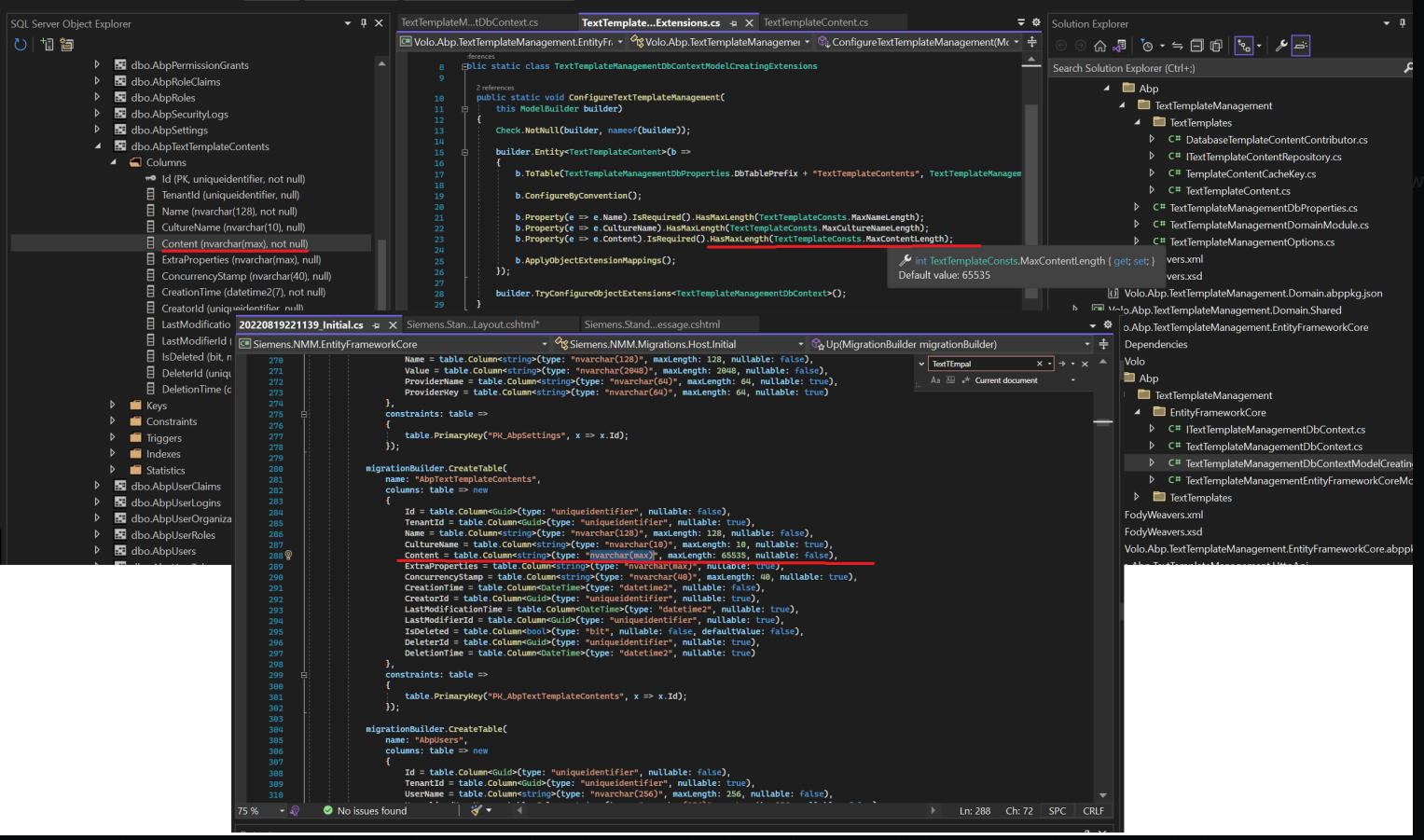
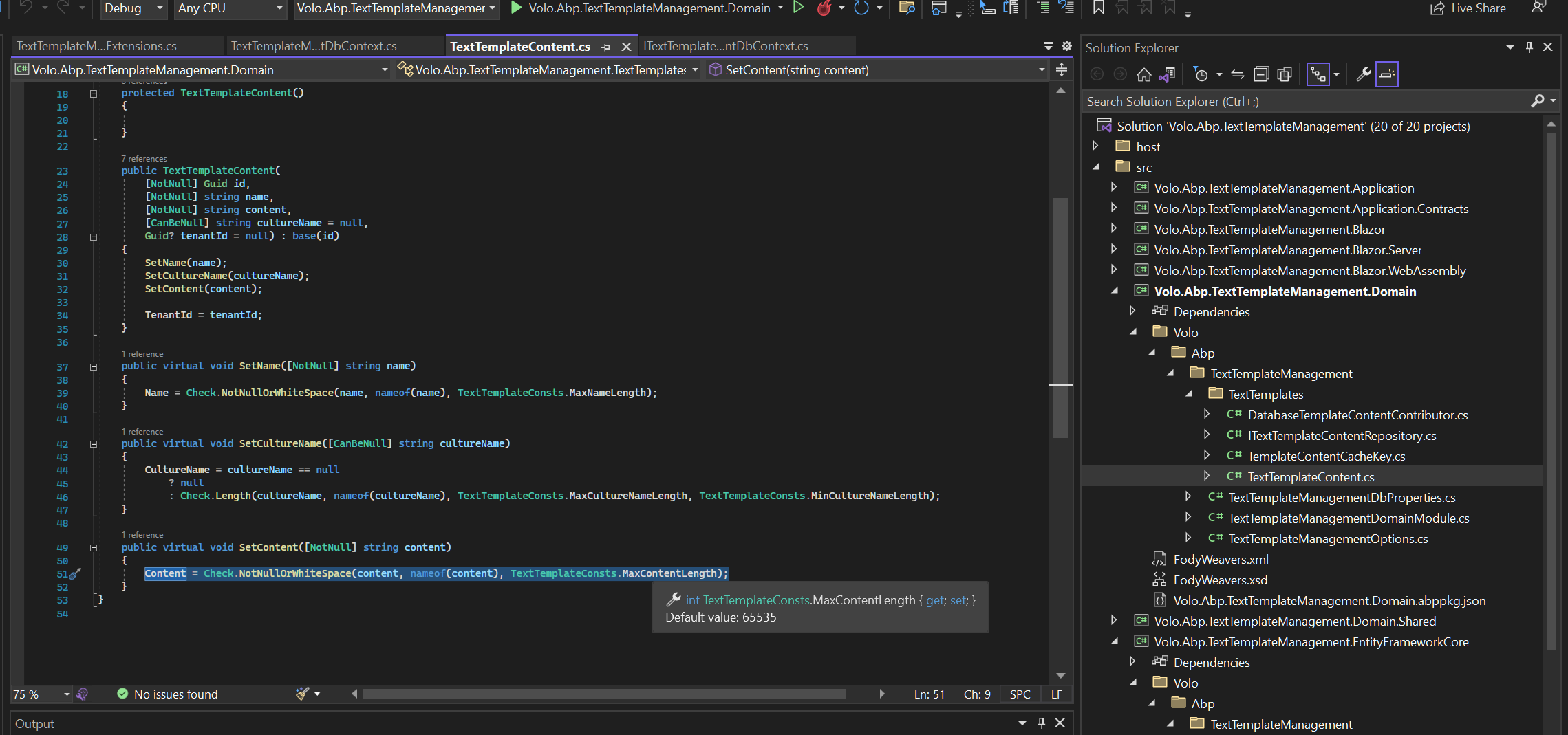
Doh, at least i'm not the only guy who waiting that fix
I recommend you to use the second database for Hangfire server.
Yeah, you are right using separate database for Hangfire most effective solution.
BTW, I recommend that you install Volo.Abp.BackgroundWorkers.HangFire package in the startup project(.MVC, .HttpApi.Host etc..). this way it does not affect the DbMigrator project
Noted.
Cheers
Hi,
I think you should create a database first, hangfire will not create a database for you.
See: https://github.com/HangfireIO/Hangfire/blob/master/src/Hangfire.SqlServer/Install.sql
Hi, Of course we need to create DB first in place. Dbmigrator console application already exists to facilitate this database create operation, right ?
   public async Task StartAsync(CancellationToken cancellationToken)
    {
        using (var application = await AbpApplicationFactory.CreateAsync<hangfireDbMigratorModule>(options =>
        {
           options.Services.ReplaceConfiguration(_configuration);
           options.UseAutofac();
           options.Services.AddLogging(c => c.AddSerilog());
        }))
        {
            **await application.InitializeAsync();**

            await application
                .ServiceProvider
                .GetRequiredService<hangfireDbMigrationService>()
                .MigrateAsync();

            await application.ShutdownAsync();

            _hostApplicationLifetime.StopApplication();
        }
    }
So let me go step by step. Console application is going to initialize modules. Right ?
That means whenever you use Volo.Abp.BackgroundWorkers.HangFire and/or Volo.Abp.BackgroundJobs.HangFire you will also run OnPreApplicationInitialization method. Right ?
public async override Task OnPreApplicationInitializationAsync(ApplicationInitializationContext context)
{
    var options = context.ServiceProvider.GetRequiredService<IOptions<AbpBackgroundWorkerOptions>>().Value;
    if (!options.IsEnabled)
    {
        var hangfireOptions = context.ServiceProvider.GetRequiredService<IOptions<AbpHangfireOptions>>().Value;
        hangfireOptions.BackgroundJobServerFactory = CreateOnlyEnqueueJobServer;
    }

    await context.ServiceProvider
        .GetRequiredService<IBackgroundWorkerManager>()
        .StartAsync();
}

public override void OnPreApplicationInitialization(ApplicationInitializationContext context)
{
    AsyncHelper.RunSync(() => OnPreApplicationInitializationAsync(context));
}
More or less whenever you start BackgroundWorkerManager you will also going to try to create **BackgroundJobServer **
await context.ServiceProvider
    .GetRequiredService<IBackgroundWorkerManager>()
    .StartAsync();
And **BackgroundJobServer **ceration requires JobStorage .Btw BackgroundJobServer constructor used in the abp package is the obsolete one
private BackgroundJobServer CreateJobServer(IServiceProvider serviceProvider)
{
    Storage = Storage ?? serviceProvider.GetRequiredService<JobStorage>();
    ServerOptions = ServerOptions ?? serviceProvider.GetService<BackgroundJobServerOptions>() ?? new BackgroundJobServerOptions();
    AdditionalProcesses = AdditionalProcesses ?? serviceProvider.GetServices<IBackgroundProcess>();

    return new BackgroundJobServer(ServerOptions, Storage, AdditionalProcesses,
        ServerOptions.FilterProvider ?? serviceProvider.GetRequiredService<IJobFilterProvider>(),
        ServerOptions.Activator ?? serviceProvider.GetRequiredService<JobActivator>(),
        serviceProvider.GetService<IBackgroundJobFactory>(),
        serviceProvider.GetService<IBackgroundJobPerformer>(),
        serviceProvider.GetService<IBackgroundJobStateChanger>()
    );
}
If you don't define any JobStorage that will cause exception about JobStorage can't be null exception
GlobalConfiguration.Configuration
    .UseSqlServerStorage(configuration.GetConnectionString("Default"));
If you define JobStorage then it will going to execute https://github.com/HangfireIO/Hangfire/blob/master/src/Hangfire.SqlServer/Install.sql scripts.
And as you already aware of that, scripts requires database in first place.
And if you remember we are about create DB :)
Long of short: Your Volo.Abp.BackgroundWorkers.HangFire and/or Volo.Abp.BackgroundJobs.HangFire are killing DbMigrator functionality by their nature of design.
Steps to reproduce the issue :