[maliming] said: hi
You can run the
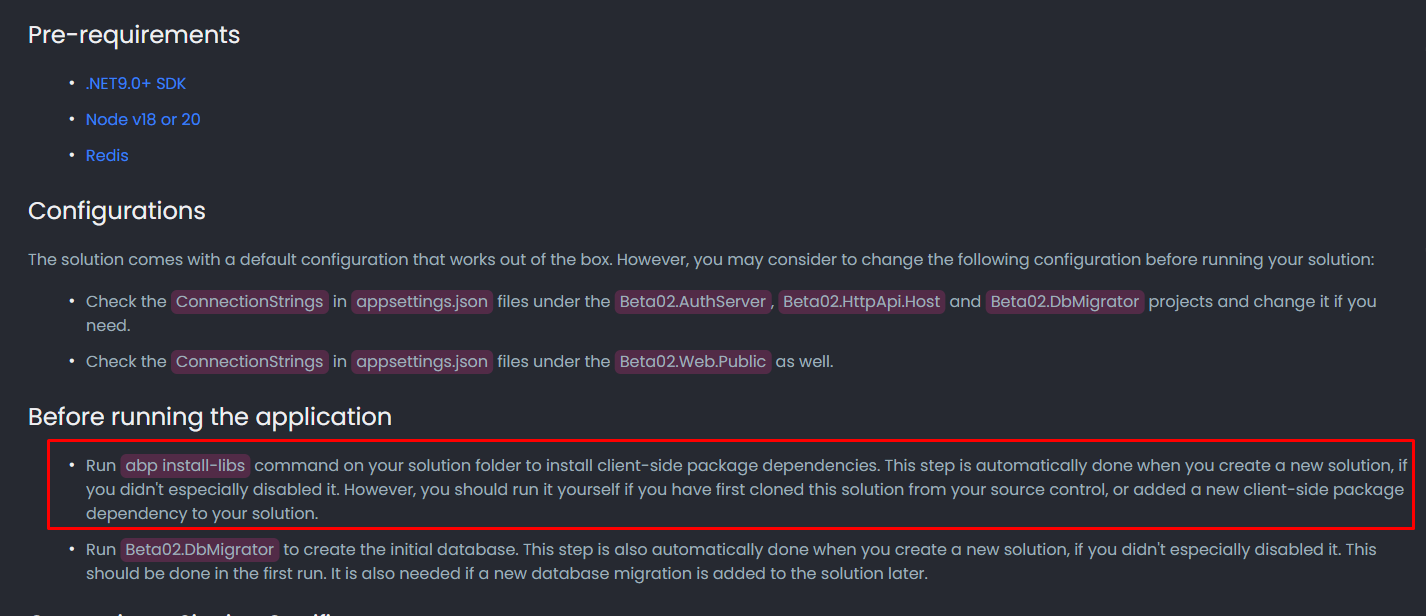
abp install-libscommand before publishing, or add this command to your publish pipeline.Thanks.
Following up on the Libs issue, the screenshot below shows the related error:
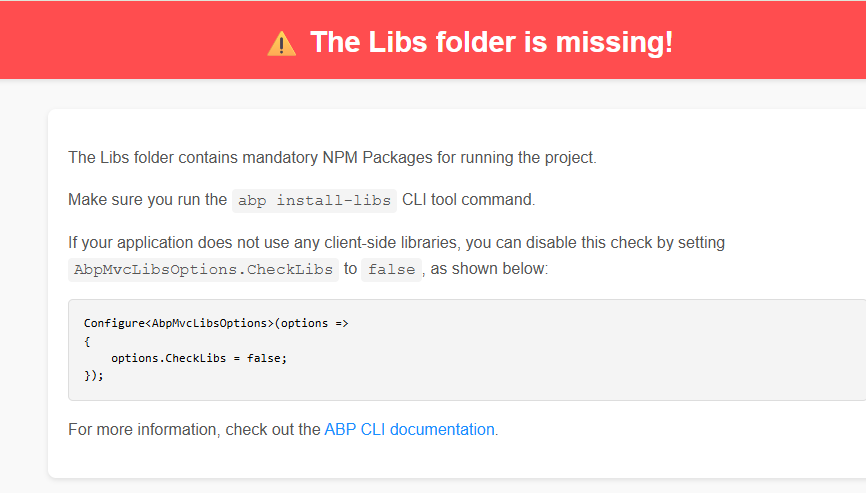
The application works correctly in my Development environment because the abp install-libs command was executed when the solution was created.
For troubleshooting, I checked the published Blazor Server application on Azure App Service, and the wwwroot/libs folder does exist in the deployed files, as shown below:
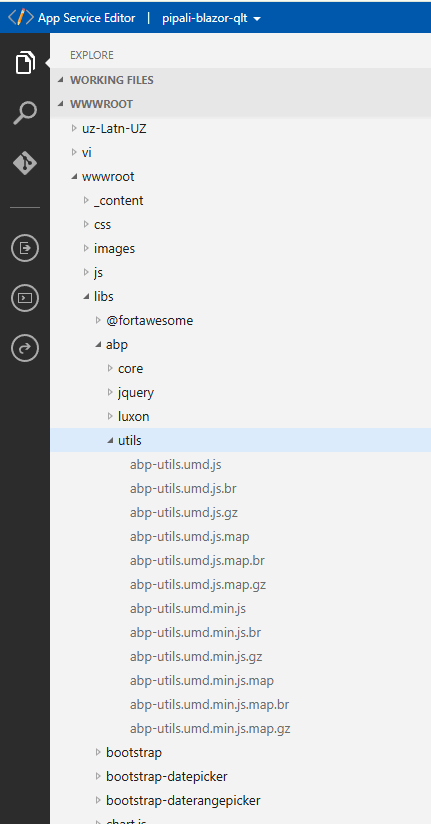
Given that the folder is present after publishing, could you please advise what else might cause ABP to report that the Libs folder is missing in this environment (e.g., path resolution, static file configuration, deployment slot/file sync, or any ABP setting that affects the libs check)?
[maliming] said: hi
Issue 2: Disabling RabbitMQ for Single-Instance Deployment
Your application is tiered, so you need a distributed event bus. However, if you need to disable it, you can replace
AbpEventBusRabbitMqModulewithAbpEventBusModulein your module dependencies.Thanks.
Hi Support Team,
Following up on the second issue (EventBus configuration).
Per your recommendation, we are temporarily switching from RabbitMQ to the default ABP EventBus (in-process) to move forward. However, our plan is to adopt the recommended best-practice setup in the near future, likely using RabbitMQ as the distributed event bus.
The attached image shows the current appsettings.json from our Blazor Server WebApp, which still includes RabbitMQ-related settings (for example, RabbitMQ:Connections:Default:HostName = "localhost").
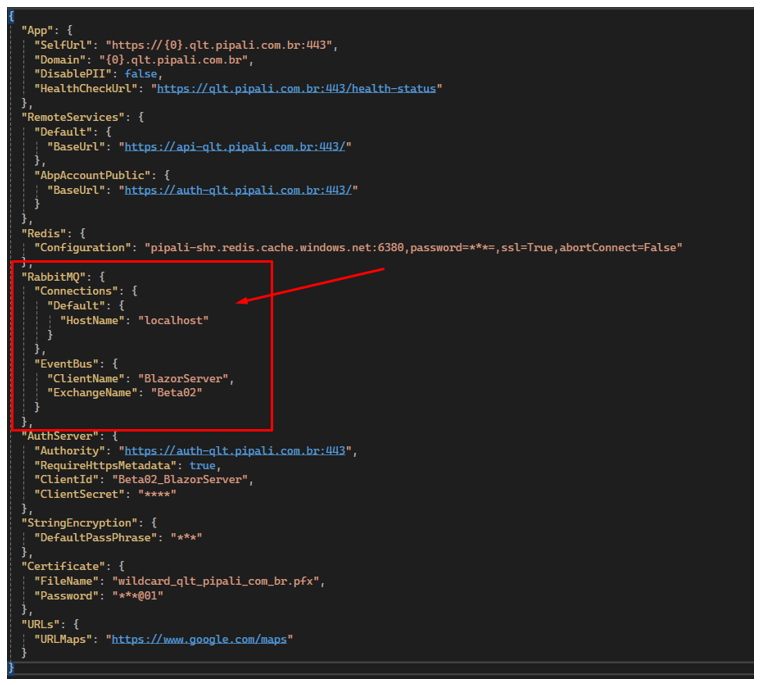
After switching to the default ABP EventBus, what exactly should we remove or change in the configuration files (appsettings.json and environment-specific settings) for:
With the default ABP EventBus, does any server/service (AuthServer vs API) need to host the event bus, or is it purely in-process per application (meaning no endpoint/host configuration is required)?
Thanks in advance for confirming the correct configuration changes now, and for advising on the best RabbitMQ hosting option for our upcoming production-ready setup.
Issue 3: ABP Library Installation and Azure Deployment
Context: The application is being published directly from Microsoft Visual Studio to an Azure App Service. The goal is to ensure that all necessary ABP libraries and client-side dependencies are correctly included in the remote server.
Core Question: What is the proper procedure to ensure all required libraries are bundled and sent to the remote server during the Visual Studio publish process?
References:
https://abp.io/docs/9.2/get-started/pre-requirements
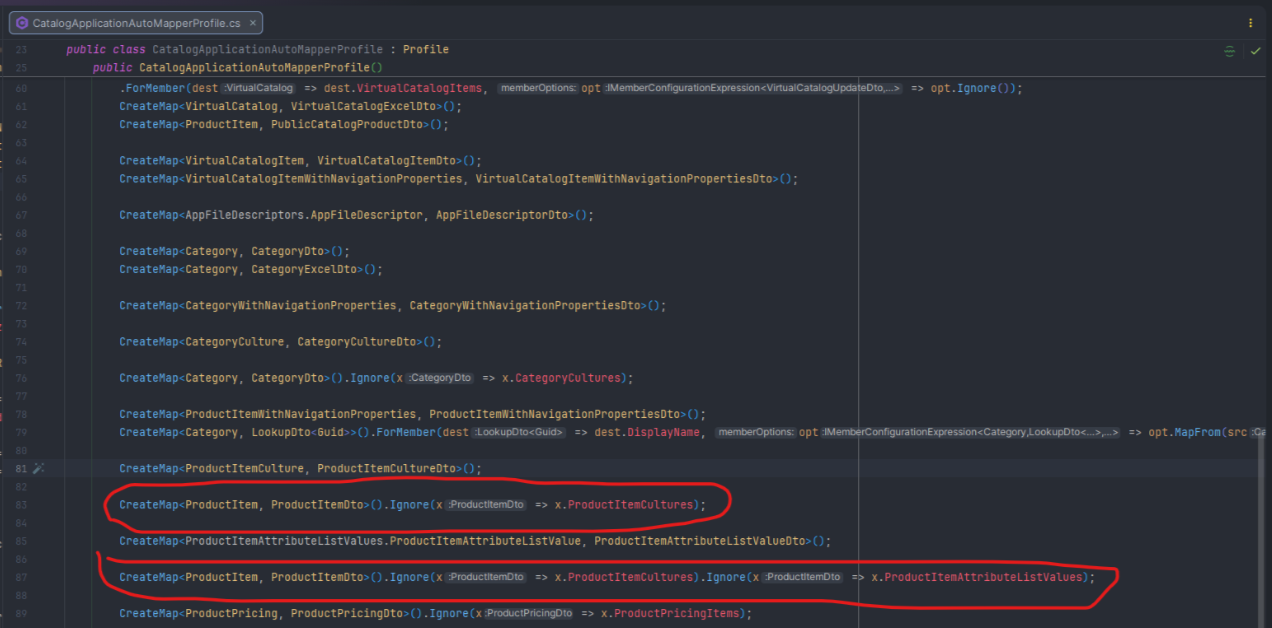
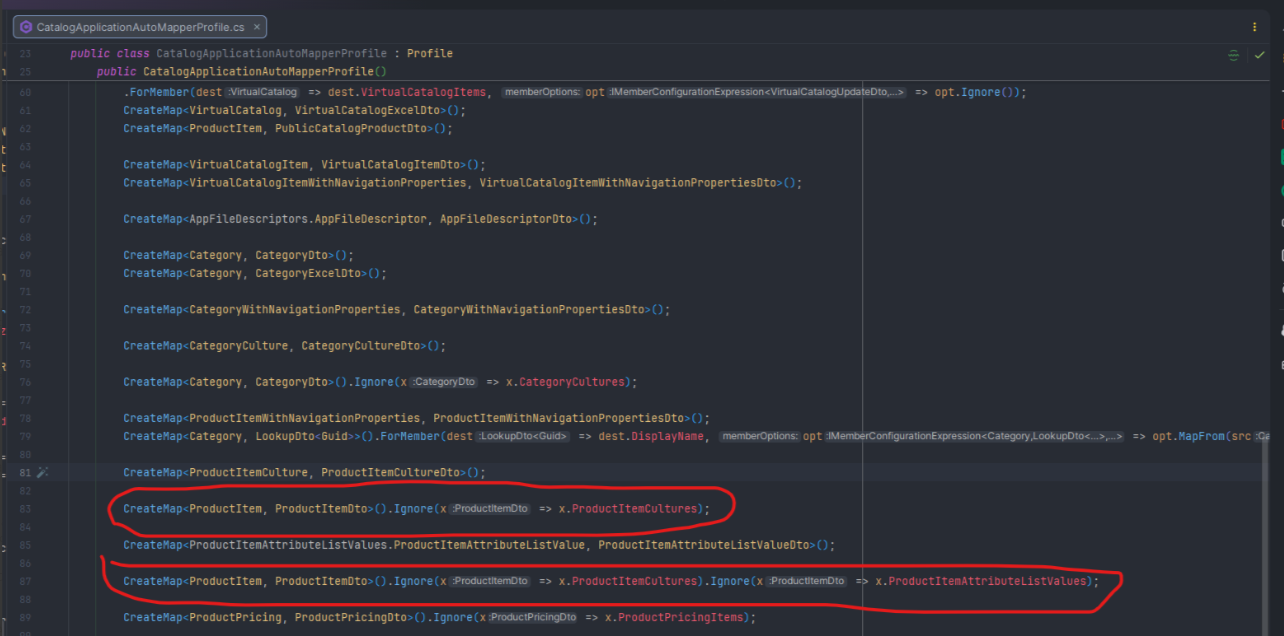
After you revisit the screenshots of the Mappers, you will see the ignore for the output. I believe this is the reason for this issue.
If there is any complement on your suggestion above that handles correctly the output for the child please bring clearer than your previous response.
Hi!
I tried to use the suggested way but the Mapper is set to Ignore the output.Can you please revisit the screenshots of the Mapper to ensure there is a right link between your suggestion and the existing Mapper. Just to enforce the context, the Mapper was created using ABP Suite templates.
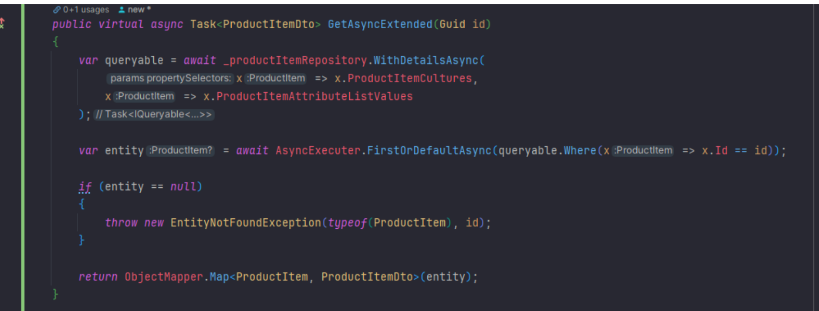
After trying to debug the issue, I found some possible cause:
a) The mapper created by ABP Suite is ignoring the child entities that I need to be returned. See the picture below:
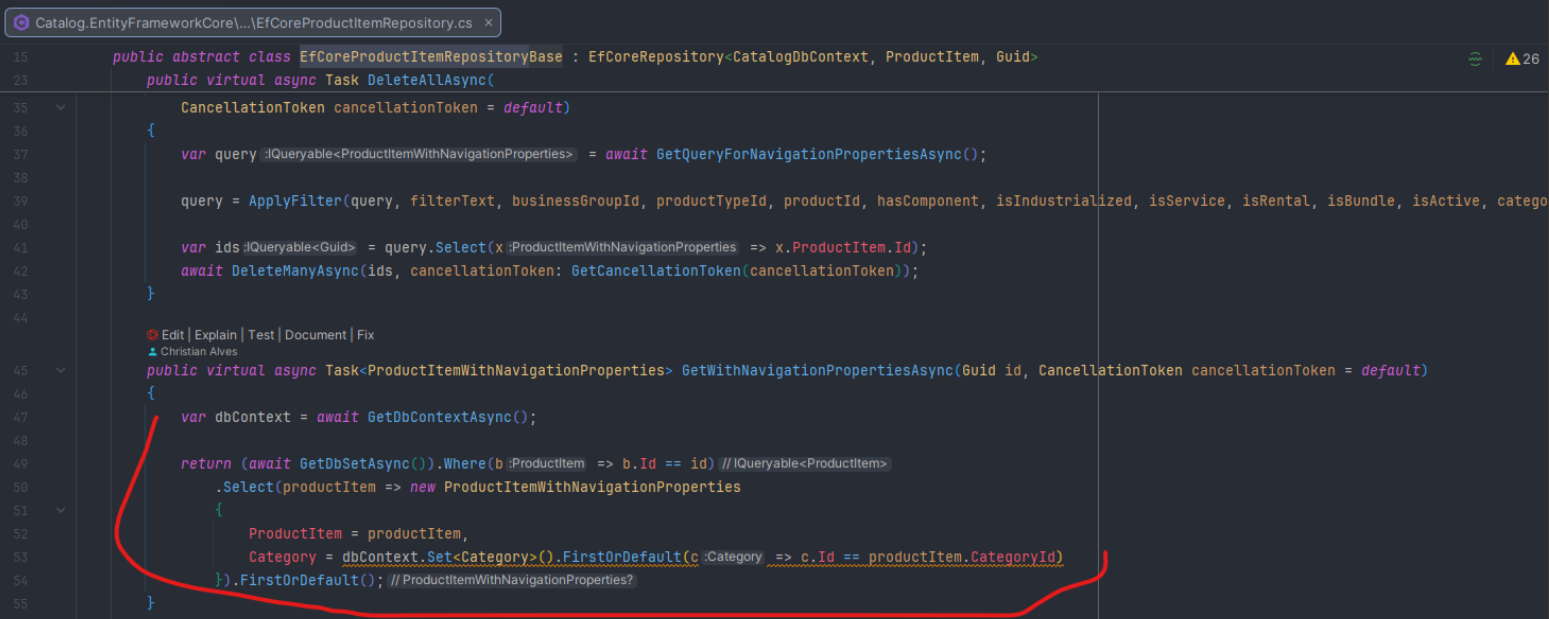
b) Something is missing at the Repository created by default using ABP Suite.
Hi Engincan,
Thank you for your response.
Let’s keep this ticket open for a few more days while I review the point and run some test scenarios based on your suggestions.
Best regards,
Hi Engincan,
Thank you for your last advice and explanation.
Considering I’m developing a multi-tenant modular monolith application using ABP.io (Blazor Server + EF Core) having the entities and initial CRUD created by ABP Suite, organized into three modules and several entities. My project needs to manage file uploads for multiple entities across these modules, supporting multiple tenants.
From my research and reviewing ABP.io’s default implementation as you mentioned in this support Ticket, I’ve noticed that when a File property is added to an entity, the framework generates a separate file container for each entity, defaulting to the database provider. For my application, this results in many containers and duplicated file management logic within each entity’s AppService.
Instead, I’d like to use Azure BlobStore as the provider, centralizing all file uploads for all tenants into a single container. My plan is to organize files using subdirectories in the following structure: Tenant/Module/Entity/Property This would ensure tenant isolation, logical organization, and easier management—while also keeping things DRY and maintainable.
As I believe the Architeture proposed by ABP represents a good choice to follow, I would appreciate your advice on these points:
1) Recommended Approach in ABP Framework: What is the best practice in ABP to use a single Azure Blob Storage container for all file properties, with subdirectory separation by tenant, module, entity, and property?
2) Centralized Configuration: How can I centralize the file container configuration so that all file uploads (across tenants, modules, and entities) are consistent, easy to maintain, and avoid duplication?
3) Overriding ABP Suite’s Scaffolding: Is there a supported way to override or customize ABP Suite’s default file management scaffolding to generate this centralized logic? If not, what’s the best way to approach it?
4) Manual Implementation and Best Practices: If this structure needs to be implemented manually, what is the recommended way to organize the code/services to keep things DRY, robust, and extensible for future needs?
The documentation is unprecise on these points—especially regarding on centralization of Azure BlobStore configuration and multi modules scenarios. Any code samples, design suggestions, or documentation references would be greatly appreciated.
Thank you very much for your help!
Hi Engincan,
Thank you for your response.
Let’s keep this ticket open for a few more days while I review the point and run some test scenarios based on your suggestions.
Best regards,