Thanks @maliming
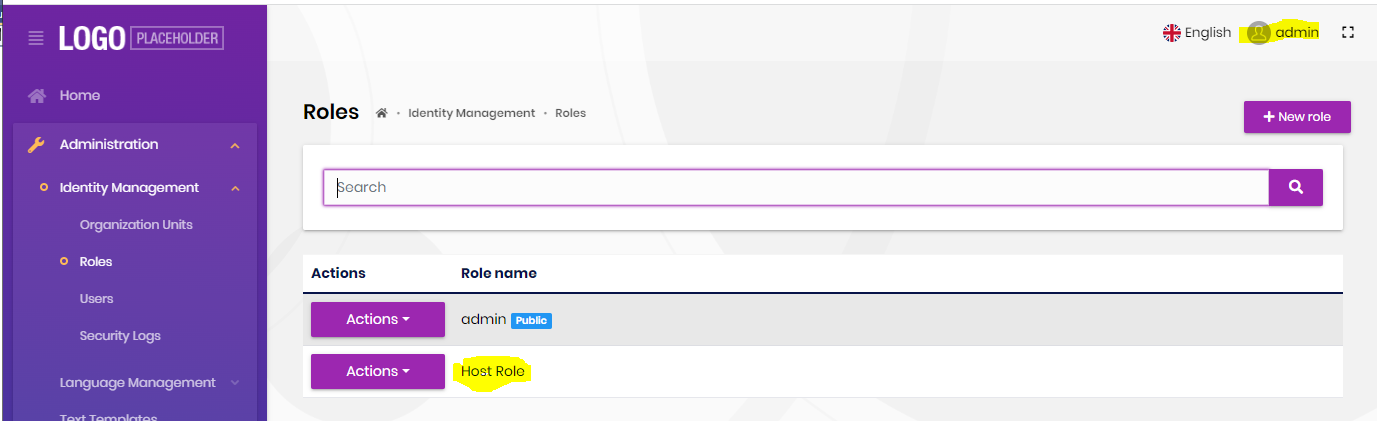
That looks good as far as the correct tenant data is shown in each page, but I noticed that the tenant name next to the user name on the upper right of the screen still doesn't show (Lepton theme - tenant\user).
Any thoughts on that?
Hi @maliming
I was able to recreate the problem with a brand new templated ABP project at version 7.0.1 (Blazor Server).
Steps to reproduce;
"Azure": {
    "SignalR": {
      "ConnectionString": "connection string I emailed you yesterday"
    }
  }
public override void ConfigureServices(ServiceConfigurationContext context)
{
    ...
    context.Services.AddSignalR().AddAzureSignalR();
}
context.Services.AddSignalR().AddAzureSignalR(); and then login as the tenant and you'll now be properly logged into the tenantLogged in as Host
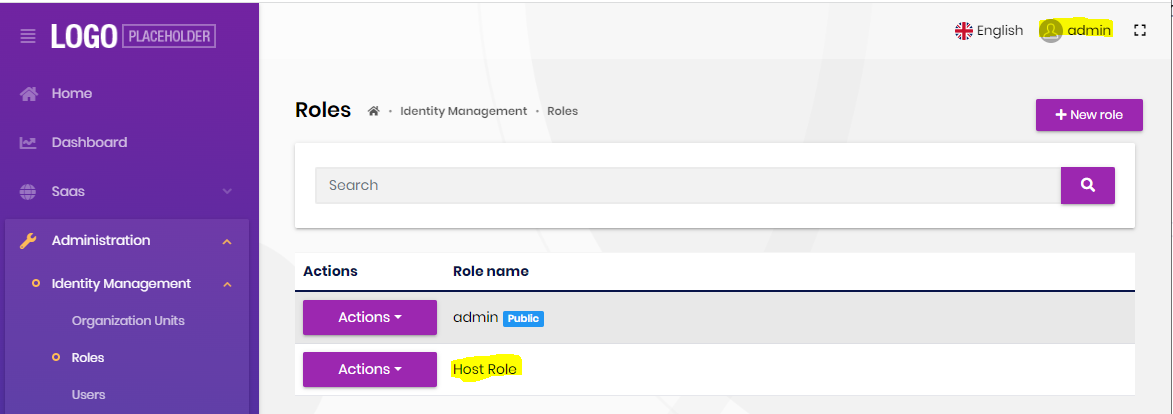
Logging in as Tenant
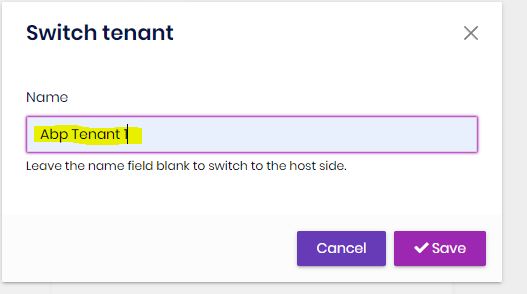
Logged in as Tenant - seeing host data and no tenant indicator on upper right of screen
I found this from 4 months ago https://support.abp.io/QA/Questions/4376/Permissions-not-working-with-Azure-SignalR-Service
Was there ever a resolution to this issue?
This appears to be the same kind of issue. We see the azure signalr connection taking place, but the abp menu/permission is all pointing to the host , even though we are logging into a particular tenant.
Also, the app doesn't need to be deployed to Azure to see the issue. The issue happens in local development when we have the signalR connection string defined in secrets.json.
Hi,
That's strange, I don't get the error
An error has occurred. This application may no longer respond until reloaded. Reload
I just get an empty menu on the left with no tenant designator in the upper right next to the user name.
Which URL were you getting that with, the demo.dev or demo.qa URL?
I added to the problem url (demo.qa) in program.cs
services.AddServerSideBlazor().AddCircuitOptions(e=> {
        e.DetailedErrors = true;
    });
and redeployed to the problem URL demo.qa (URL with the SignalR service turned on) and I don't see any errors in the logs or in the browser tools. I just emailed you the full log after the redeploy.
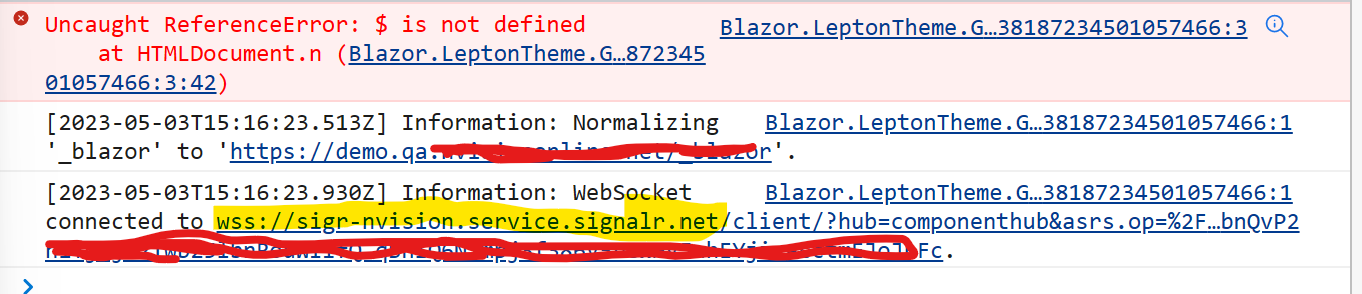
Here is a comparison of the browser console ....
demo.dev url with no SignalR service enabled - works perfectly fine:
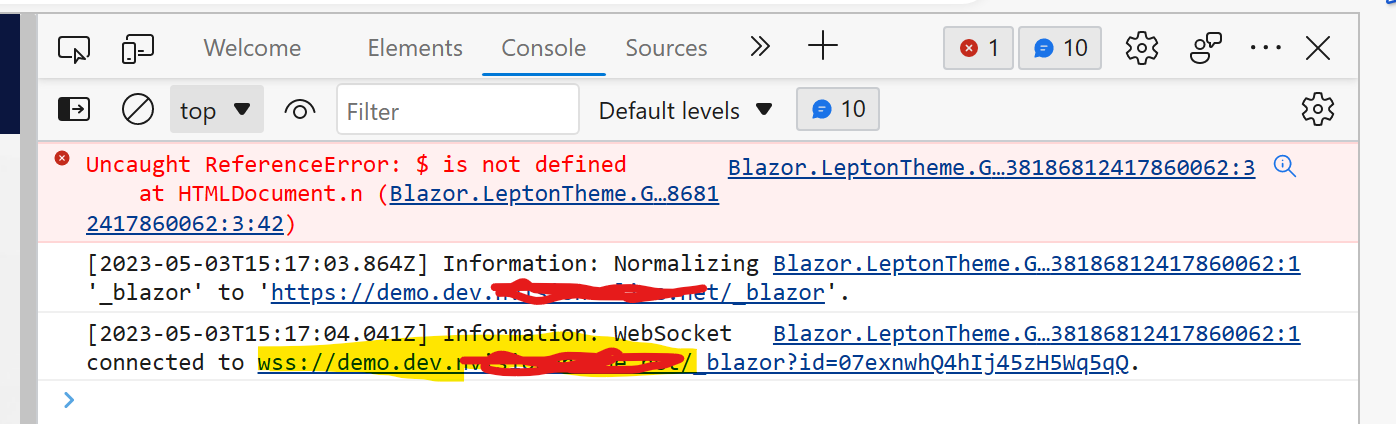
demo.qa url with SignalR service enabled - does not work:
hi
Can you share an online URL so I can test it?
I sent you a private email with a URL and credentials.,
Thanks
ABP Commercial 7.0.1 / Blazor Server / EF / Non tiered / Separate Host DB, Separate Tenant DBs / Lepton Theme
Hi,
We are attempting to use Azure's managed SignalR service in our Blazor Server application in order to make it more scalable.
Using MS documentation, we created a SignalR resource in Azure and used the issued SignalR connection string when configuring services...
context.Services.AddSignalR().AddAzureSignalR(<SignalR-Connection-string-here>);
The problem we are having is that the application no long works as expected once this line of code is introduced. What we are seeing is the logic for our tenant resolver (based on subdomain) no longer works. When logging in under tenant1.myapp.com, the UI seems to be logging into the host instead of tenant1. No exception is logged.
As soon as we remove the the call to AddSignalR().AddAzureSignalR everything works as expected.
Is there something specific with a templated Blazor Server solution in ABP that needs to be accounted for?
Any thoughts/suggestions? Thanks in advance,
Brian
ABP Commercial 7.0.1 / Blazor Server / EF / Non tiered / Separate Host DB, Separate Tenant DBs
Hi,
We are inheriting from the FeatureDefinitionProvider to create custom feature groups and features and we don't see a way to set the ordering of feature groups.
How can this be done with ABP (Blazor Server / Lepton Theme)?
We essentially want our features listed before features from dependent ABP modules.
Thanks in advance!
The issue was resolved once using https.
Thanks
HI @liangshiwei
Thank you. I'm waiting for our TLS certs to be issued and I expect the issue(s) to be resolved once we are running https.
I'll follow up and confirm the resolution soon...
Update:
When we run the deployed application using Azure App Service's default URL.. {appname}.azurewebsites.net... everything works fine.
However, for production, we need to map the {appname}.azurewebsites.net URL to a different production URL using DNS and Azure's Application Gateway service.
We receive the errors only when accessing the production mapped URL.
Our app works as expected in every way under the production URL, except for the saving of a user's profile (My Account).
Is there an override or workaround?
Thanks in advance.









